Intro paragraph
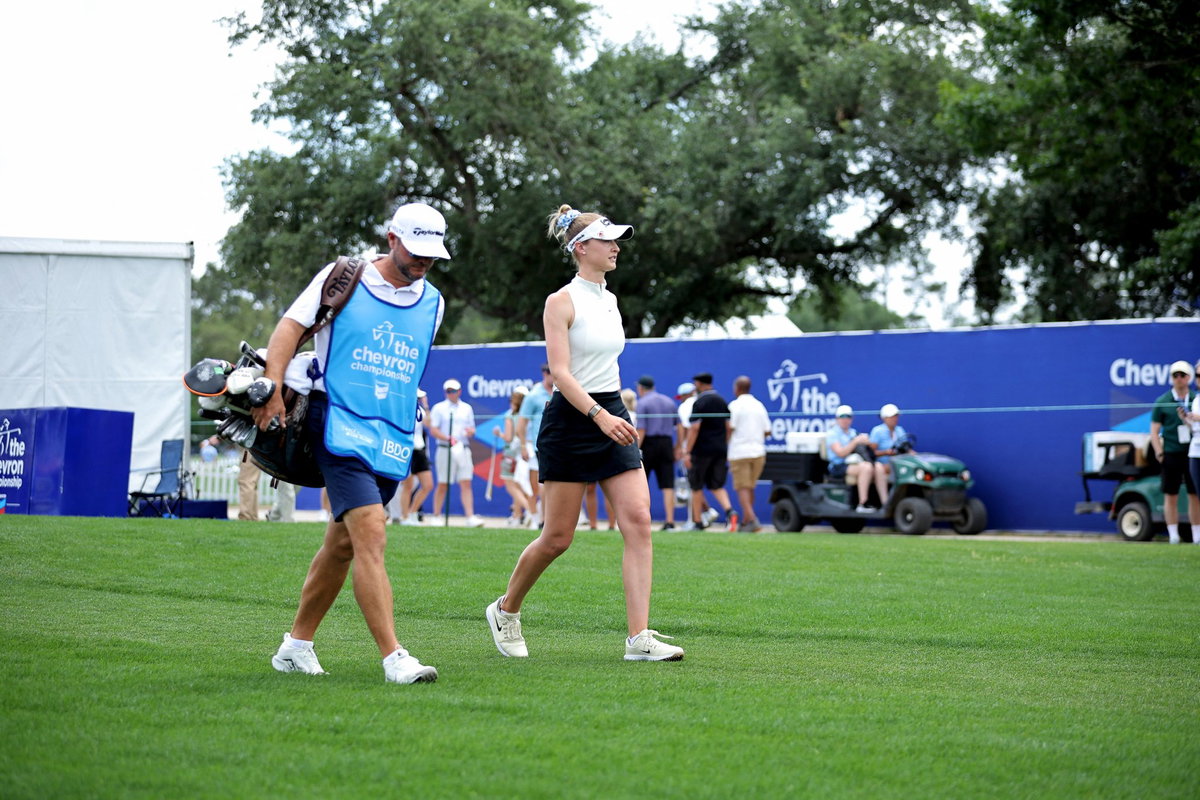
As anticipation builds for the 2026 U.S. Women's Open at Riviera Country Club, Nelly Korda is making headlines with her unconventional approach to preparation. Unlike many competitors who obsessively analyze every aspect of the course, Korda has decided to rely on her instincts and internal confidence, sparking discussions about the evolving strategies in women's golf.
Key takeaways
- Nelly Korda is eschewing extensive course research for the U.S. Women’s Open, choosing to trust her instincts instead.
- This method reflects a growing trend among elite players prioritizing mental readiness over meticulous preparation.
- Korda has a history of thriving under pressure, suggesting that her unique strategy could yield positive outcomes.
- The U.S. Women's Open at Riviera Country Club is a prestigious tournament with a rich history dating back to 1946.
- Riviera's challenging course layout emphasizes the risk of Korda's approach, contrasting with traditional preparation methods.
Context and background
Nelly Korda has rapidly emerged as a powerhouse in women's golf since her professional debut. Born in 1998, Korda claimed her first major victory at the 2021 KPMG Women's PGA Championship, signaling her arrival among golf's elite. Korda's style, characterized by technical precision and emotional fortitude, has quickly captured the admiration of fans and analysts alike.
The U.S. Women's Open, one of the sport's most prestigious events, has been a platform for remarkable talent since its inception in 1946. It showcases the skills of top players vying for a title that has been won by legends such as Annika Sorenstam and Mickey Wright. Riviera Country Club, an iconic venue in Pacific Palisades, California, will be hosting the championship in 2026. The course, known for its challenging design, has a storied history and has hosted numerous high-profile tournaments, including the Genesis Invitational.
Since its establishment in 1926, Riviera's par-71 layout has presented golfers with treacherously slick greens and nuanced bunkering patterns, requiring thorough preparation. In contrast, Korda's decision to forgo preparatory research stands in stark contrast to the conventional wisdom that espouses meticulous pre-tournament analysis.
Nelly Korda's unconventional strategy at Riviera
Nelly Korda is stirring controversy and curiosity in the lead-up to the 2026 U.S. Women's Open by declaring that she has done “absolutely no research” on Riviera Country Club. Her perspective strays significantly from the rigorous preparation strategies favored by many of her peers. Rather than consulting course maps or analyzing previous tournaments, she chooses to lean into her natural strengths as a golfer.
This radical approach, seemingly impulsive, questions the status quo of professional golf wherein success is often considered a product of data-driven preparation. Critics might see Korda's approach as reckless, but history has shown that her confidence can lead to outstanding performances under pressure, evidenced by five LPGA Tour victories and a multitude of top-10 finishes in major championships.
Moreover, Korda's strategy reflects a larger trend in women's golf, with players increasingly recognizing the importance of mental strength as pivotal to success. Embracing their instincts over exhaustive analysis underscores the significance of psychological resilience in the game. For example, Korda's unabashed self-reliance suggests that the balance between analytical preparation and mental tenacity may be shifting the competitive landscape.
In their own words
"I think sometimes you can overdo it with research. I prefer to trust my instincts while I’m out there. I focus on what I see rather than getting lost in the numbers."
— Nelly Korda
What this means for golfers
Korda's refreshing approach provides an important lesson for recreational golfers who often become fixated on overanalyzing every aspect of their game. Her methodology suggests that trusting one's instincts may enhance performance and lead to improved results, particularly under competitive pressure. For amateur players, finding the right balance between being well-prepared and maintaining a relaxed mindset may be crucial for playing their best rounds.
Furthermore, Korda's focus on mental fortitude emphasizes that while technical skills and course knowledge are vital, cultivating a confident mindset can significantly influence outcomes. Amateur golfers might benefit from strategies such as mental visualization, breathing exercises, and positive self-talk to strengthen their mental game and bolster resilience on the course.
What's next
As the U.S. Women's Open approaches, anticipation builds not just for the tournament itself but also for Korda's unique preparation strategy and its implications for the event. With her decision to skip traditional research, Korda stands at the intersection of instinct and experience, a narrative that will undoubtedly draw attention from a global audience.
The competition promises to be fierce, featuring established champions and ambitious newcomers all seeking their place in history. As spectators prepare for an exciting challenge at Riviera Country Club, they will also be eager to witness the impact of evolving preparation methods in golf. Whether Korda's instincts yield success remains uncertain, but her courage to push boundaries is poised to inspire many golfers around the world.

/https%3A%2F%2Fcdn.pijper.io%2F2026%2F06%2FRkUgIHk3UBT3tw1781080975.jpg)