
Intro paragraph
During the final qualifying round for the U.S. Open, PGA Tour winner Adam Svennson found himself in an unexpected spotlight—not for his gameplay, but for an uncharacteristic breach of golf regulations. This incident serves as a poignant reminder of the critical role that rules knowledge plays in the world of competitive golf.
Key takeaways
- PGA Tour winner Adam Svennson made a significant mistake during the U.S. Open qualifying round.
- The violation involved a break of established golf rules that are widely known among amateur players.
- Svennson's error led to costly penalties that impacted his performance and advancement.
- This incident highlights the necessity for players, regardless of their level, to stay attuned to the rules.
- The U.S. Open's stringent qualifying requirements add to this incident's historical significance.
Context and background
The U.S. Open has been a cornerstone of competitive golf since its inception in 1895. Known for its strict qualifying standards and rigorous course conditions, the event attracts thousands of competitors each year—ranging from aspiring amateurs to seasoned professionals. The United States Golf Association (USGA) enforces stringent rules to ensure fairness and integrity throughout the tournament.
Typically, only about 1% of participants in qualifying rounds manage to earn a coveted spot in this prestigious championship. Historical data indicates that the average score required for qualification hovers around 2-4 strokes over par for the top performers. This year, anticipation ran high as former PGA Tour winners and emerging talents strained every muscle in pursuit of just a few playoff spots.
A costly mistake on a big stage
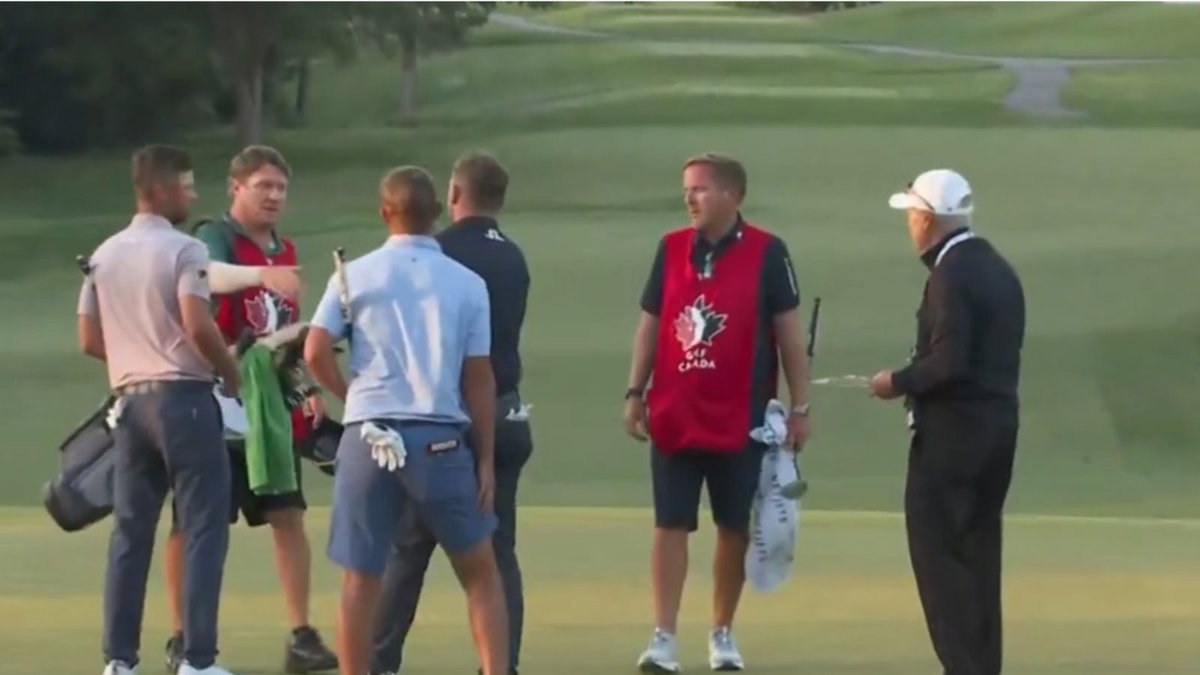
Amid heightened expectations for a strong outing, Svennson faced a critical error during the final qualifying round at a notable venue. Over the course of his round, it was discovered through post-round evaluations that he had mistakenly recorded an incorrect score on one of the holes. Such an oversight, while perhaps seeming minor in casual settings, bore significant ramifications in a high-stakes tournament where precision and rules adherence are paramount.
The repercussions of Svennson's error were profound: not only did it lead to penalties that subsequently altered his scorecard, but it also dashed his hopes of qualifying for the U.S. Open. In an environment where every stroke counts, having an inaccurate figure could mean the acute difference between a place in golf's Grand Slam event and an early exit. This misjudgment has become a focal point for discussion, sparking necessary conversations about rule awareness among players at all levels.
Golf analysts emphasize the gravity of scoring accuracy in professional golf, noting how Svennson's miscalculation came at a cost that might not be fully realized until he reflects on its impact on his trajectory in the sport. During this year's qualifying, the stakes have never been higher. Given the elevated number of competitive talents vying for limited spots, even the slightest mishap can have crushing consequences.
In their own words
"It’s a hard pill to swallow, especially knowing how crucial every shot is at this level. I have to take full responsibility for my mistake and learn from it moving forward."
— Adam Svennson
What this means for golfers
This incident has significant implications for golfers of all skill levels, emphasizing the necessity of in-depth rule knowledge. Golf is a sport replete with regulations that dictate everything from scoring to behavior on the course. With even world-class professionals like Svennson susceptible to errors, it is essential for recreational players to familiarize themselves with the rules surrounding scoring and penalties.
Moreover, this incident serves to remind golfers that high-pressure scenarios can lead to lapses in concentration, prompting the need to maintain a thorough understanding of the regulations at play. As players invest in improving their games—whether through new equipment, practice strategies, or mental coaching—time spent on refining their knowledge of the rules is equally important.
What's next
As the golf community watches closely, many are eager to see how Adam Svennson will bounce back from this misstep. His upcoming appearances on the PGA Tour will be pivotal in determining how he adapts after such a significant learning moment. Additionally, the implications of this incident for future U.S. Open qualifying rounds are clear; the spotlight on rules education will likely grow brighter, prompting players to prioritize their understanding of regulations.
Ultimately, the story of this year's qualifying rounds will be one of resilience and learning, with Svennson potentially becoming a symbol for change within the sport. As players reflect on his experience, a stronger emphasis on education regarding the rules may lead to a more mutually respectful golfing community, ideally avoiding the pitfalls that can come with oversight.

/https%3A%2F%2Fcdn.pijper.io%2F2026%2F06%2FRkUgIHk3UBT3tw1781080975.jpg)