

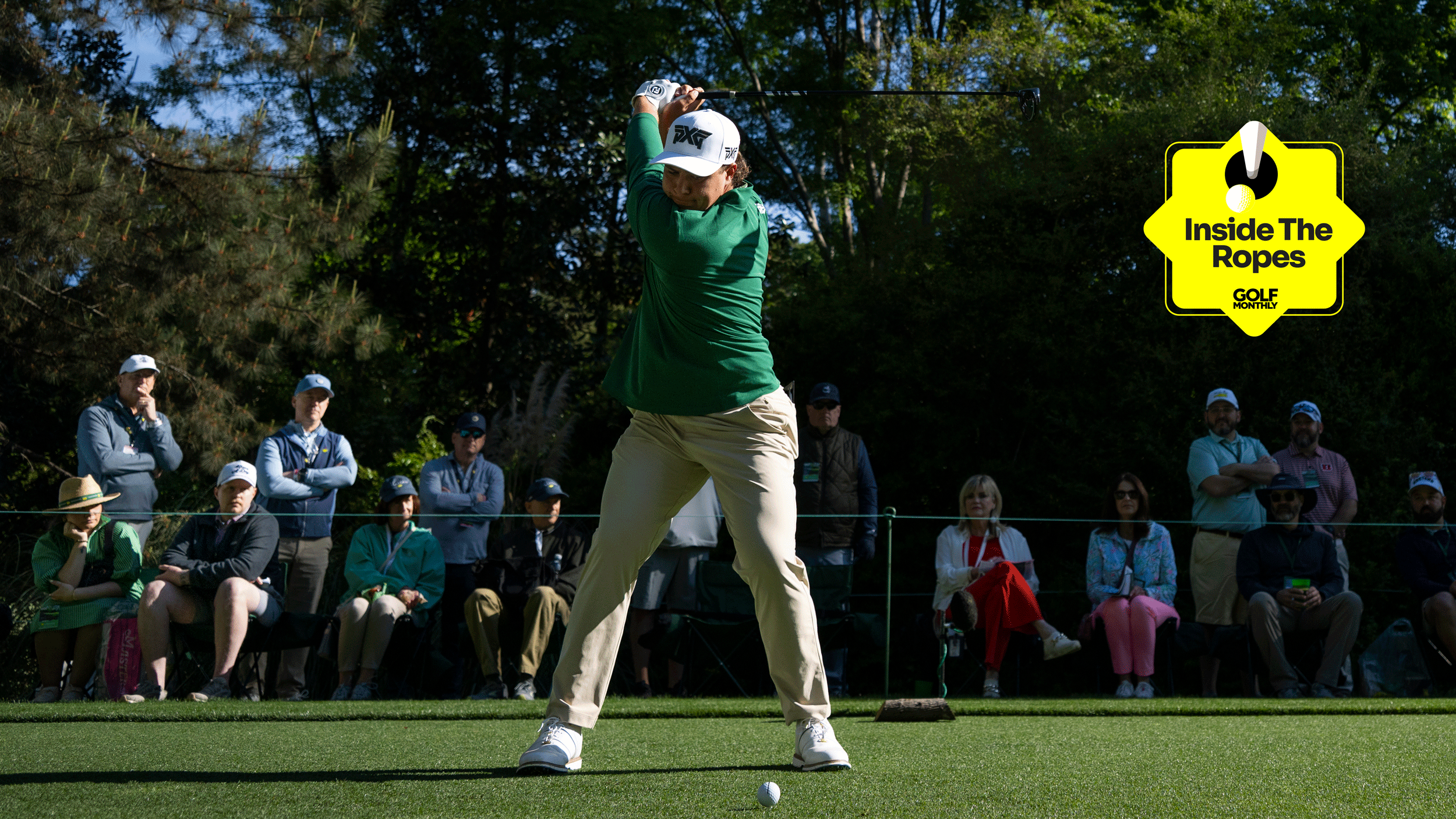
Pro golf faces a distance dilemma: solutions for the future
In recent years, the professional golf scene has witnessed a significant surge in driving distances, with players routinely sending the ball soaring to unprecedented lengths. This evolution in the game raises critical questions: is the increasing distance detrimental to the sport, and what measures, if any, should be adopted to manage it? As players embrace advanced technology and athleticism, the golfing world grapples with the ramifications of these changes.
Key takeaways
- The average driving distance on professional tours has risen by over 30 yards in the last two decades.
- Debate continues among players, coaches, and officials about potential measures to limit distance gains.
- New equipment technologies and athlete training methods are major contributors to the distance increase.
- Some argue for changes in course setups, while others advocate for equipment regulations.
- The governing bodies of golf are considering solutions but face resistance from various stakeholders.
Context and background
The increasing distance in golf is not a recent phenomenon; however, in the last two decades, the staggering rise in average driving distances has become a topic of intense discussion within the sport. According to statistics, the average drive on the PGA Tour has increased from around 270 yards in the early 2000s to over 300 yards today. This represents a significant change, as players like Bryson DeChambeau and Rory McIlroy have showcased the ability to hit drives that exceed 350 yards with regularity.
This evolution can be attributed to various factors, including advancements in club technology, swinging techniques, and athletic training. Golf clubs now boast enlarged sweet spots, lighter materials, and improved aerodynamics that enhance performance. Meanwhile, players have adapted their training regimens, incorporating physical conditioning and biomechanics, leading to a new era of athletic golfers who prioritize power alongside precision.
The growing distance debate
The immediate question many in the golfing community are asking is: does the growth in distance compromise the essence of the game? Critics argue that with players hitting the ball farther than ever, classic courses are rendered obsolete, thus challenging the integrity of the sport. Iconic layouts that were once considered par-fours may now become easy par-threes, eliminating the unique strategic challenges that these courses offer.
Discussions about the potential modifications to equipment have gained traction, particularly in the corridors of the USGA and R&A, the two main governing bodies in professional golf. Proposals vary from adjusting the specifications of golf balls to altering club design or equipment regulations. These potential changes could slow down the trend of distance acceleration. However, they present significant pushback from players who are resistant to altering the rules and regulations of their equipment.
Furthermore, as golf has grown commercially, it has stumbled upon a paradox: many fans enjoy the spectacle of powerful drives and long hitters, which suggests that the allure of distance is commercial rather than purely sporting. Leagues and tournament organizers see increased ticket sales and viewership around events showcasing long drives, creating a complex dilemma for decision-makers.
In their own words
"The game is changing, and we must adapt. But it's crucial to strike a balance between maintaining tradition and embracing progress."
— Rory McIlroy
"Limiting distance could generate fewer exciting moments on the course. Golf is evolving, and we should embrace that evolution."
— Bryson DeChambeau
What this means for golfers
For regular golfers, understanding the distance debate can provide insight into how they approach their own game. The increasing power in professional golf serves as a reminder of the physicality now required in the sport. Recreational golfers might consider training regimens that emphasize strength and conditioning, mirroring professional trends without compromising the technical aspects of their play.
While new equipment can enhance performance, golfers should also focus on skill development to better control their distance and accuracy. Investing in lessons from certified instructors who focus on swing mechanics may prove beneficial, as it aligns with the trend of maximized capabilities without solely relying on technology.
What's next
As the debate continues, all eyes will be on the upcoming PGA Tour events and any resulting rule changes proposed by the governing bodies. Discussions surrounding distance control have the potential to reshape the courses future generations play—a matter of preserving the spirit of golf while accommodating the exciting developments in athletic performance. For now, the golfing world remains deeply invested in finding a solution that satisfies both purists and the new wave of long-hitting players.
/https%3A%2F%2Fcdn.pijper.io%2F2026%2F04%2FCG887gIpQjvOAt1776429091.jpg)