

Chasing distance the wrong way
Every golfer wants more distance off the tee. It is the single most seductive promise in the sport, and it drives an entire industry of oversized clubheads, stiff shafts, and training aids that claim to add thirty yards overnight. But here is the uncomfortable truth that most players refuse to accept: swinging harder almost never produces longer drives. In fact, for the vast majority of amateur golfers, the aggressive lunge at the ball is the very thing robbing them of the distance they crave.
The physics are unforgiving. When you swing beyond your natural tempo, your sequencing falls apart. The hands race ahead of the hips, the clubface opens or closes unpredictably, and the strike drifts toward the heel or toe. Off-centre contact on a modern 460cc driver can cost you twenty to forty yards, far more than any marginal increase in clubhead speed could ever recover. A smooth, centred strike at 95 miles per hour will routinely outperform a wild slash at 105.
So if swinging harder is not the answer, what is? The answer lies in a handful of fundamentals that are remarkably simple to understand and, with deliberate practice, entirely achievable for players of every level.
Tee height: the overlooked foundation
Most golfers give almost no thought to how high they tee the ball, and it shows. They push a tee into the ground at whatever depth feels vaguely familiar and proceed to wonder why their drives balloon into the wind or skid along the ground with no carry.
The general guideline is straightforward: when you sole the driver behind the ball at address, roughly half the ball should sit above the crown of the clubhead. For most modern drivers with deep faces, this means the ball is teed approximately one and a half inches above the turf. But this is a starting point, not a commandment.
If you tend to hit the ball high with excessive spin, experiment with teeing it a quarter inch lower. If your drives come off low and never seem to get airborne, raise it slightly. The key insight is that tee height directly influences where on the clubface you make contact, and vertical strike location is one of the biggest factors in launch conditions. A strike just above centre produces less spin and a higher launch, which is precisely the combination that maximises carry distance.
A simple tee height drill
Place a strip of impact tape or foot spray on your driver face and hit ten balls at your usual tee height. Note where the cluster of strike marks falls. If they are consistently low on the face, raise your tee. If they are high and toward the top edge, lower it. Adjust in small increments until the cluster sits just above the centre line. This single adjustment can be worth ten to fifteen yards with no change to your swing.
Ball position: further forward than you think
The driver is the only club in the bag that you want to strike with a slightly ascending blow. To achieve this, the ball needs to be positioned forward in your stance, opposite or just inside your lead heel. Many golfers instinctively creep the ball back toward the centre of their stance, especially when they are struggling with accuracy. This is counterproductive. A ball positioned too far back encourages a descending strike, which increases spin and reduces launch angle, producing those weak, low drives that hit the fairway but run out of steam well short of their potential.
Stand in front of a mirror with your driver and check your ball position honestly. You may be surprised at how far back it has drifted. Place an alignment stick on the ground pointing at your lead heel and use it as a reference during practice sessions until the correct position becomes instinctive.
Launch angle and spin: the numbers that matter
Thanks to launch monitors becoming widely available at fitting studios and even driving ranges, golfers now have access to the data that tour professionals have used for years. Two numbers matter more than any others for maximising driving distance: launch angle and spin rate.
For a golfer with a clubhead speed around 95 miles per hour, the optimal launch angle is typically between 12 and 15 degrees, with a spin rate between 2,200 and 2,700 revolutions per minute. Too much spin and the ball climbs steeply before dropping out of the sky. Too little spin and it never gets high enough to carry. The ideal combination produces a penetrating ball flight that carries far and still rolls out on landing.
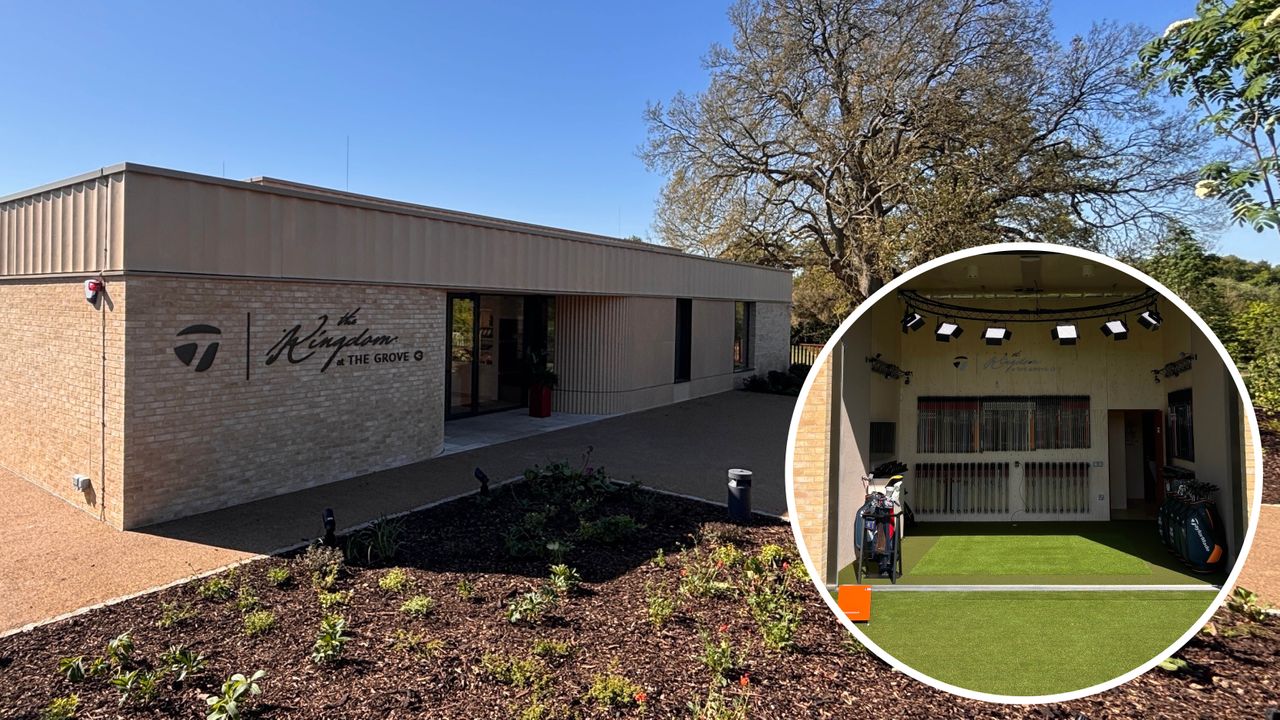
You cannot achieve these numbers by feel alone, which is why a proper driver fitting is one of the best investments any golfer can make. A fitting session on a quality launch monitor will reveal your actual numbers and allow a fitter to adjust loft, shaft weight, shaft flex, and even clubhead weighting to optimise your launch conditions. Many golfers are playing drivers with too little loft because they believe a lower number on the clubhead looks more impressive. In reality, a golfer with moderate swing speed will almost always hit it further with a 10.5 or even 12 degree driver than with a 9 degree model.
Getting fitted properly
A professional club fitting is not a luxury reserved for low handicappers. It is arguably more beneficial for higher handicap players, who tend to have more to gain from optimised equipment. When booking a fitting, look for a facility that uses a reputable launch monitor and has access to a wide range of shaft and head combinations. Be wary of fittings conducted at retail outlets where the primary goal is to sell you the most expensive option on the wall.
Come to the fitting warmed up and ready to hit balls. Wear the shoes and glove you normally play in. Be honest with the fitter about your typical ball flight and your goals. A good fitter will not try to rebuild your swing. They will find the equipment that works best with the swing you already have.
What to look for in your fitting data
Pay attention to your smash factor, which is the ratio of ball speed to clubhead speed. A smash factor of 1.45 or higher indicates solid, centred contact. If your smash factor is below 1.40, no amount of equipment optimisation will compensate for the inconsistency of your strike. In that case, invest in a few lessons before spending money on a new driver.
Drills that build real distance
The most effective driving drills focus on tempo, sequencing, and strike quality rather than raw speed. Here are three that deliver measurable results.
The 80 percent drill
Hit twenty drives at what feels like 80 percent of your maximum effort. Focus on a smooth transition at the top and a balanced finish where you can hold your pose for three seconds. Note how far these shots carry. Most golfers are stunned to discover that their 80 percent swings travel nearly as far as their all-out efforts, with dramatically better accuracy. This is the feeling you want to take to the course.
The step drill
Address the ball with your feet together. As you begin your backswing, step your lead foot toward the target, then swing through. This drill trains your lower body to initiate the downswing, which is the single most important move in generating effortless power. When the hips lead and the arms follow, clubhead speed increases naturally without any sense of strain.
The gate drill
Place two tees in the ground just wider than your clubhead, about six inches in front of the ball. Hit drives while ensuring the clubhead passes cleanly between the tees after impact. This encourages a square, on-path delivery and discourages the over-the-top move that plagues so many amateur swings. Start with the gate wide and gradually narrow it as your consistency improves.
Bringing it all together
Longer drives are not hiding behind a more violent swing. They are waiting in the details you have been overlooking: a properly set tee height, a ball positioned forward enough to promote ascending contact, launch conditions matched to your speed through intelligent fitting, and a tempo that allows you to find the centre of the clubface time after time.
The next time you stand on the tee and feel the urge to grip it and rip it, remind yourself of a simple truth. The longest hitters in professional golf look effortless for a reason. Their power comes from sequence, not strain. Yours can too. Set the tee at the right height, position the ball off your front heel, swing at 80 percent, and watch the ball fly past where your hardest swings used to land. That is the real secret to driving distance, and it has been there all along.

/https%3A%2F%2Fcdn.pijper.io%2F2026%2F06%2FRkUgIHk3UBT3tw1781080975.jpg)