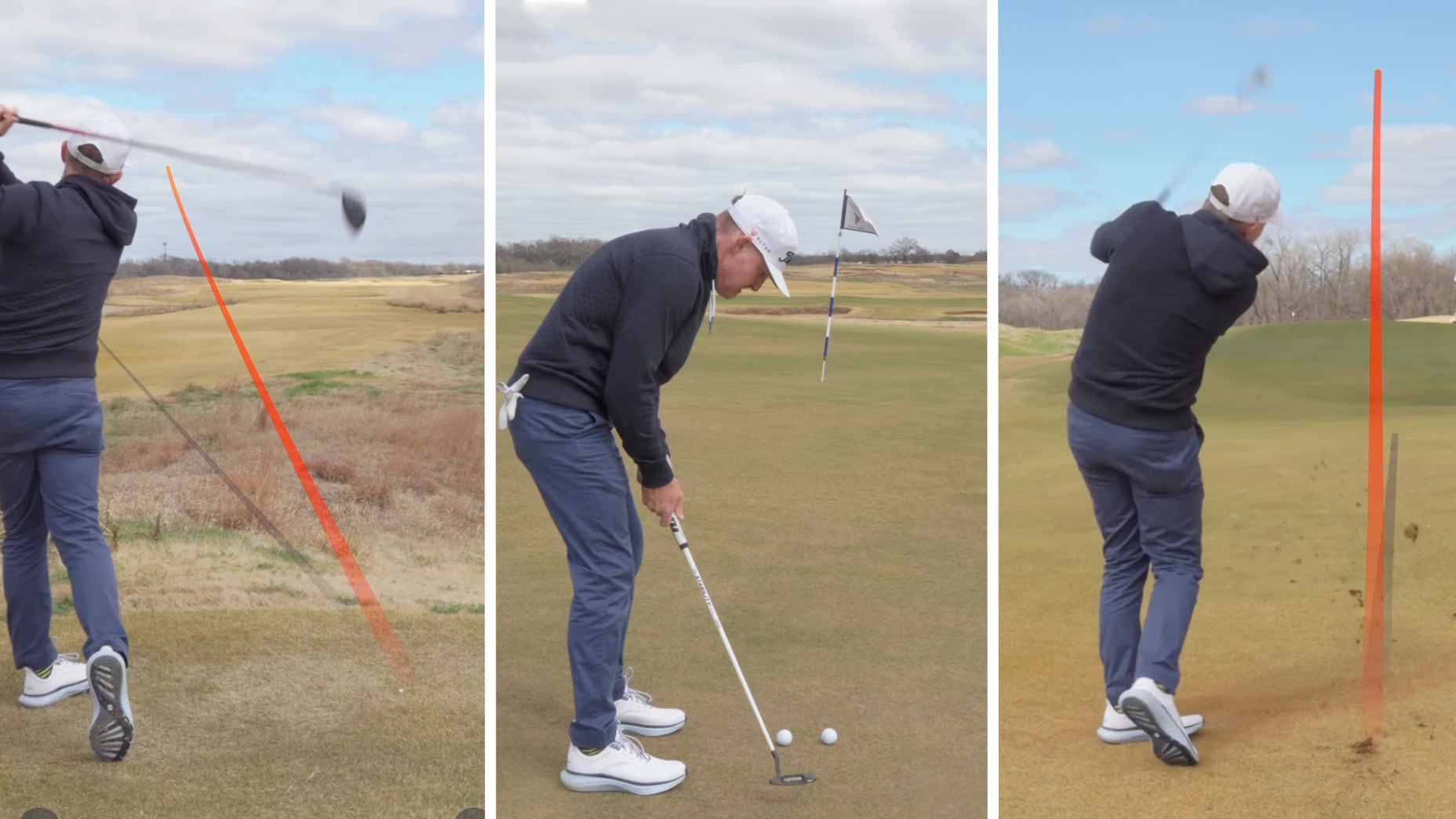
Every golfer, from the weekend enthusiast to the touring professional, eventually arrives at the same conclusion: there are no shortcuts past the fundamentals. You can buy the latest driver, watch hours of slow-motion footage, and tinker endlessly with training aids, but until the core mechanics of your swing are sound, consistency will remain elusive. The good news is that a reliable swing is not reserved for the genetically gifted. It is built, piece by piece, on six foundational pillars that anyone can learn.
The grip: your only connection to the club
Your hands are the sole point of contact between your body and the club, which makes the grip arguably the most important fundamental in golf. A flawed grip can sabotage even the most athletic swing, while a correct one quietly sets the stage for everything that follows.
The Vardon grip, also known as the overlapping grip, remains the gold standard for the vast majority of players. To form it, place the club in the fingers of your lead hand — not deep in the palm — so that the handle runs diagonally from the base of the index finger to just beneath the heel pad. Wrap your fingers around the shaft, and you should see two knuckles of your lead hand when you look down. Now place your trail hand on the club so that the pinky finger of the trail hand rests in the groove between the index and middle fingers of the lead hand. The lifeline of your trail palm should sit snugly over your lead thumb.
Grip pressure is frequently overlooked. On a scale of one to ten, aim for about a four. You need enough firmness to maintain control through impact, but a death grip creates tension in the forearms and shoulders that kills clubhead speed. Think of holding a tube of toothpaste without squeezing any out — firm yet relaxed.
Common mistake: Gripping too much in the palm rather than the fingers. This reduces wrist hinge and costs you distance. Another frequent error is a grip that is too weak, with the lead hand rotated too far to the left for a right-handed golfer, which tends to leave the clubface open at impact and produces a persistent slice.
Stance: building a stable foundation
A proper stance gives you balance, power, and the ability to rotate freely. For a standard iron shot, your feet should be roughly shoulder-width apart. With the driver, widen your stance by an inch or two on each side to accommodate the longer, more powerful swing arc. The ball position shifts forward as the club gets longer — inside the lead heel for the driver, centre of the stance for mid-irons, and slightly back of centre for short irons and wedges.
Your weight should be evenly distributed between both feet, with a slight favouring of the balls of the feet rather than the heels. Flex your knees just enough to feel athletic, as if you were ready to field a ground ball. Tilt forward from the hips — not the waist — allowing your arms to hang naturally. Your spine angle at address is the axis around which your entire swing will rotate, so establishing it correctly is non-negotiable.
Common mistake: Standing too far from or too close to the ball. When you are too far away, you reach for the ball and lose posture during the swing. Too close, and your arms get cramped, promoting an overly steep swing path. A simple check: at address, a straight line dropped from your shoulders should fall just past your toes.
Alignment: aiming where you actually want to go
Poor alignment is one of the most widespread problems in amateur golf, and it is deceptive because it feels invisible. Many golfers who think they have a swing problem actually have an aim problem. Your body — feet, knees, hips, and shoulders — should be aligned parallel left of the target line for a right-handed player. Think of it like railway tracks: the ball sits on the outer rail aimed at the target, and your body lines up along the inner rail.
During practice, lay an alignment stick or a spare club on the ground along your toe line to build a visual reference. On the course, pick an intermediate target — a divot, a discoloured patch of grass, or a leaf — a foot or two in front of your ball that sits directly on your target line. It is far easier to align to something nearby than to a flag two hundred yards away.
Common mistake: Aligning the body directly at the target rather than parallel to it. Because you stand to the side of the ball, aiming your feet at the flag actually points you to the right. This often triggers compensations in the swing, most commonly an over-the-top move that pulls the ball back to the left.
The backswing: loading the spring
The backswing exists to put the club in a position from which it can be delivered powerfully and accurately to the ball. It is not a display of flexibility or a race to see how far back the club can travel. The takeaway should begin with the shoulders, arms, and club moving together in one connected unit. For the first foot or so, the clubhead stays low and tracks straight back along the target line.
As the swing continues, your wrists will naturally begin to hinge, setting the club on an upward plane. Allow your lead shoulder to turn under your chin while your hips resist slightly, creating a coil between the upper and lower body. This differential is where power comes from. At the top, your lead arm should be reasonably straight — not rigid — and the club shaft should ideally be parallel to the ground and pointing along the target line.
Common mistake: Swaying laterally instead of rotating. If your head drifts significantly off the ball during the backswing, you have introduced a lateral movement that must be perfectly reversed on the way down — an incredibly difficult timing challenge. Focus on turning around your spine rather than shifting away from the target. Another frequent fault is an overly long backswing achieved by collapsing the lead arm or lifting the club with the hands. Length gained this way adds no power and significantly reduces control.
The downswing: delivering the club
The transition from backswing to downswing is where most swings are made or broken. It should feel unhurried, even though it happens in a fraction of a second. The sequence matters enormously: the downswing is initiated from the ground up. A subtle lateral shift of the hips toward the target is followed by a rotational clearing of the hips, which pulls the torso, which pulls the arms, which delivers the club. This kinetic chain, when timed correctly, produces effortless-looking power.
One of the most useful feelings to cultivate is that of the hands dropping into the slot at the start of the downswing. Rather than throwing the club at the ball from the top, allow gravity and the rotation of your body to shallow the club onto a more inside path. This promotes a draw ball flight and solid contact with a divot that starts at or just after the ball.
Common mistake: Starting the downswing with the shoulders or hands. This move, commonly called casting or coming over the top, steepens the swing path and typically results in a weak slice or a pulled shot to the left. If you struggle with this, try pausing for a half-second at the top of your backswing during practice swings. It forces you to feel the lower body initiate the movement rather than the upper body lunging at the ball.
The follow-through: the mirror of your swing
While the ball is already gone by the time you reach the follow-through, this phase is a reliable diagnostic tool for everything that came before it. A balanced, full finish tells you that your swing was sequenced well and that you maintained your posture throughout. You should finish with your belt buckle facing the target, your weight almost entirely on your lead foot, and the club wrapped around behind your lead shoulder. You should be able to hold this position comfortably for several seconds without stumbling.
A follow-through that is cut short, off-balance, or twisted usually indicates that something went wrong earlier — an overly aggressive lunge, a loss of posture, or an attempt to steer the ball rather than swing through it. Practise making full, balanced finishes even on the range, and you will find that the rest of the swing begins to organise itself around that committed endpoint.
Putting it all together
The temptation in golf is always to chase the latest tip or quick fix. But the players who improve year after year are the ones who return to fundamentals with discipline and patience. Grip, stance, alignment, backswing, downswing, follow-through — these six pillars are not glamorous, but they are the architecture upon which every great swing is built. Work on them one at a time. Film yourself from face-on and down-the-line angles to check your positions. And above all, resist the urge to change everything at once.
A swing built on sound fundamentals may not look flashy, but it will hold up under pressure, repeat under fatigue, and reward you with the most satisfying feeling in the game: the crack of a well-struck shot that flies exactly where you intended.