Intro paragraph
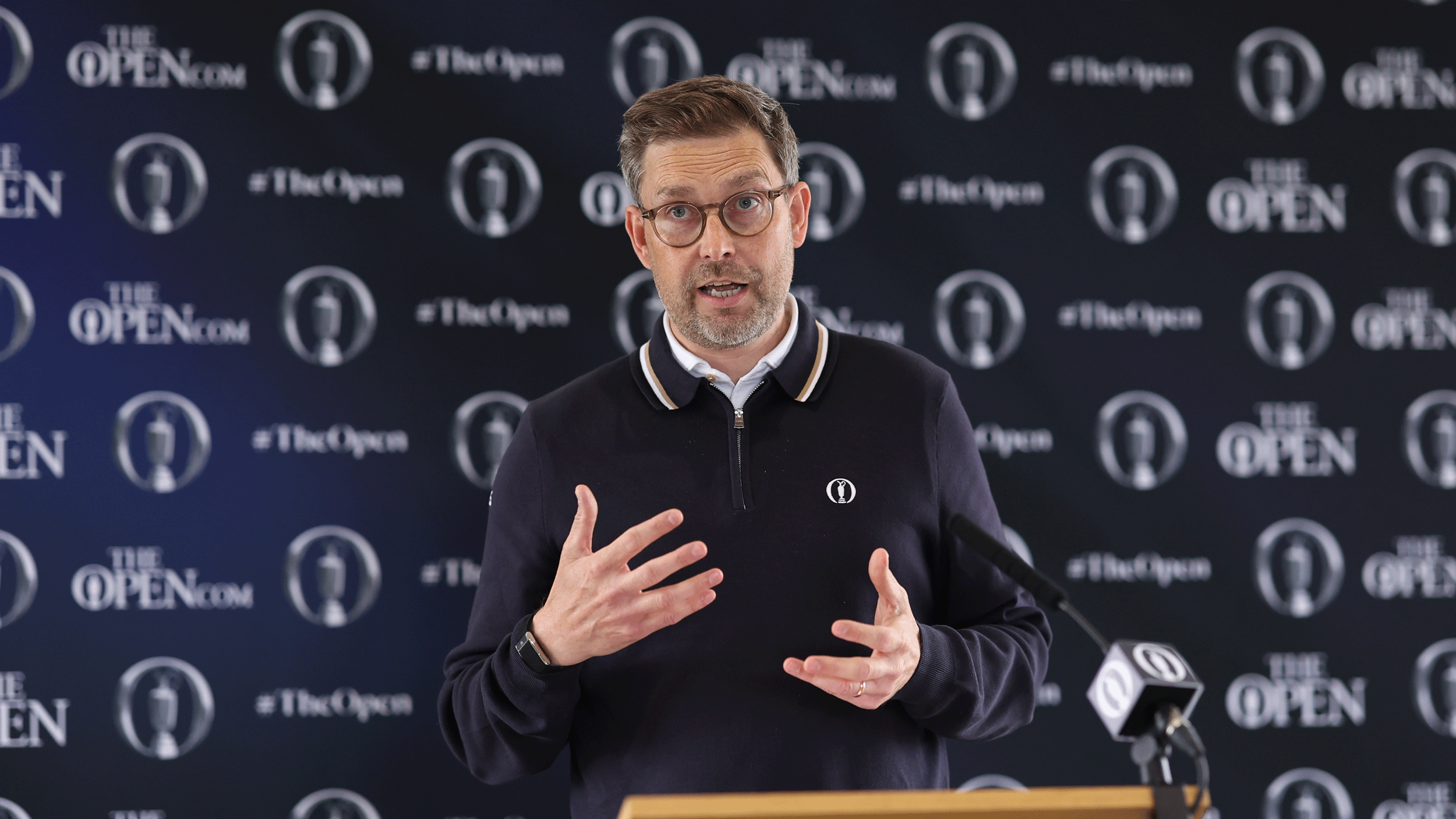
The Open Championship, one of golf's most prestigious events, may witness a revolutionary change in its rules this year. Mark Darbon, CEO of the R&A, has hinted at the introduction of a new code of conduct that could impose a two-stroke penalty on players guilty of misconduct. This move aims to reinforce the discipline and etiquette that have long been cornerstones of the sport.
Key takeaways
- Mark Darbon announces potential introduction of a code of conduct.
- Two-stroke penalties could be implemented for players committing misconduct.
- The change aims to maintain the integrity of the game.
- The Open has a long-standing tradition of upholding sportsmanship.
- Further details are expected to emerge as the tournament approaches.
Context and background
Golf has always prided itself on its rich history and strict adherence to etiquette. Throughout its evolution, the game has emphasized the importance of integrity and respect among players and towards the course itself. The roots of this ethos can be traced back to the early days of golf in the 15th century, with gentlemanly conduct expected on and off the course. The USGA and R&A have established rules which govern play, but often the challenge lies in enforcing sportsmanship. Misconduct, such as unsportsmanlike behavior, can overshadow athletic achievements, which is why governing bodies like the R&A are taking steps to address it decisively.
Code of conduct: maintaining integrity in the game
The proposed code of conduct at The Open represents a significant step in recognizing that player behavior is as critical as their skills on the course. With the introduction of potential two-stroke penalties for offenses, the R&A aims to create an environment where respect for the game is paramount. This initiative stems from a growing concern over incidents of unsporting conduct witnessed at professional events in recent years, which have shown a troubling trend contrary to the principles of the game.
The idea of enforcing penalties is not unprecedented. Across various sports, strict codes of conduct have become commonplace, reflecting the need for accountability among athletes. For instance, in tennis, unsportsmanlike behavior can lead to point penalties or game penalties, making the stakes clear for players. Implementing such measures in golf can promote decorum, assuring spectators that the integrity of the game remains intact.
This initiative has the potential to redefine how players approach their conduct, serving as a reminder that golf is as much about manners and respect as it is about skills. As stated by Darbon, “We are committed to ensuring that The Open is not only a showcase for the top golfers but also a celebration of the values that the game represents.”
In their own words
“A code of conduct will reinforce the importance of integrity within golf. We hope to see this initiative enhance the spirit of the game at The Open.”
— Mark Darbon, CEO of The R&A
What this means for golfers
The introduction of a code of conduct, especially one with corresponding penalties, sends a strong message not only to professional players but also to amateur golfers. Recreational golfers can learn the importance of behavior on the course, fostering an environment that promotes respect for the game and fellow players. Understanding that misconduct can have tangible consequences may encourage all golfers—whether on the PGA Tour or a local course—to uphold the integrity of the sport.
For amateurs aspiring to play at a higher level, adhering to the principles of good sportsmanship will be crucial. Building a reputation as a respectful player can open doors, whether in casual play or competitive events. Furthermore, when purchasing new equipment or golf-related golf items, enthusiasts may be drawn to brands that promote this ethos of respect and professionalism.
What's next
As The Open approaches, golf enthusiasts can expect more developments regarding the enforcement of this code of conduct. The R&A is likely to issue detailed guidelines regarding what behaviors will be deemed misconduct and the specific penalties that will be applied. Observers will be keen to see how this changes the dynamics of competition at this iconic championship. With the rate of penalties anticipated to evolve further, this initiative could redefine competitor interactions, thus emphasizing that every swing, every putt, and every word spoken matters immensely in the realm of professional golf.