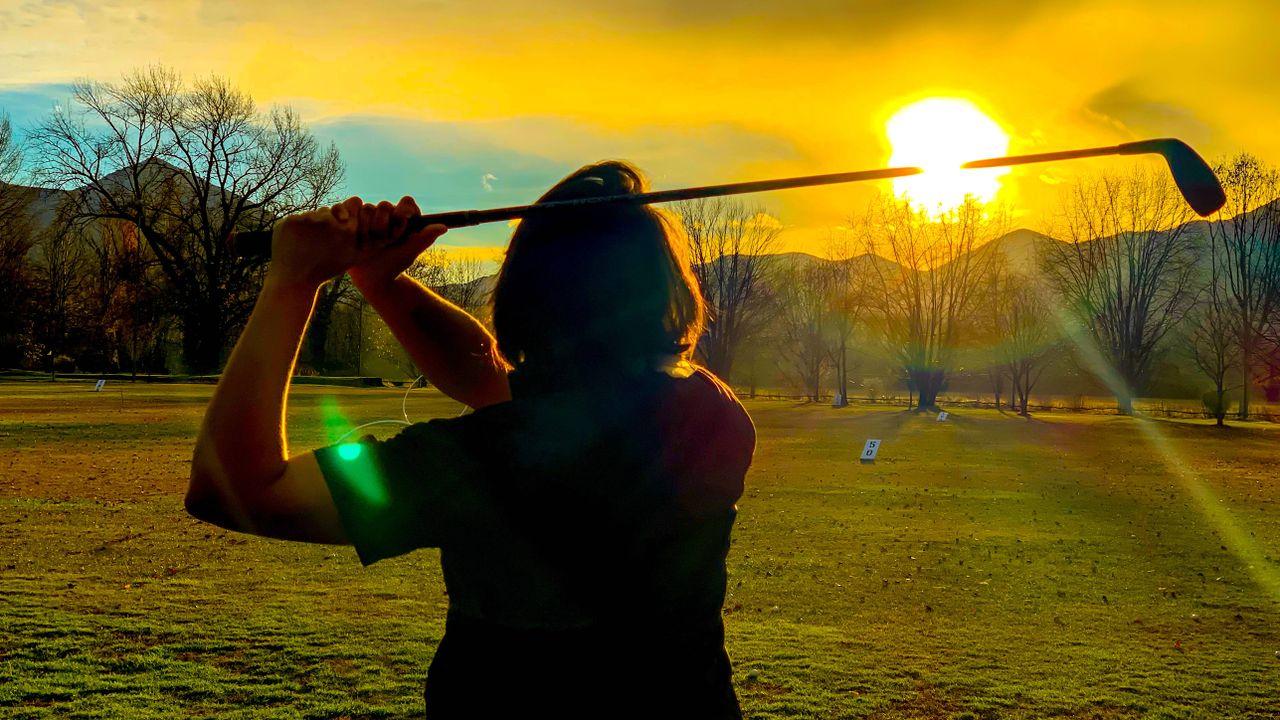


There is a moment, usually sometime around the fourth hole, when the Algarve stops being a golf destination and starts feeling like a revelation. The winter sun sits low and warm against your back, the Atlantic breeze carries the faintest salt, and the turf beneath your feet is so immaculately maintained that you briefly forget you are playing in what was, not so long ago, one of Europe's best-kept secrets. That secret is well and truly out now, but the Algarve has lost none of its magic in the telling.
I have played golf across four continents and more than thirty countries, and I keep returning to this slender strip of southern Portugal with the same quiet certainty that draws migratory birds south each autumn. The reasons are straightforward but remarkably difficult to replicate elsewhere: exceptional courses in extraordinary concentration, a climate that borders on the absurd in its generosity, and a cost of play that makes comparable destinations look frankly predatory.
Monte Rei: where ambition meets artistry
Let us begin at the top, because Monte Rei demands nothing less. Jack Nicklaus designed the course that bears his name here, and it remains one of the finest expressions of his philosophy anywhere in Europe. Set among the rolling hills of the eastern Algarve, far from the busier resort corridors, Monte Rei occupies its landscape with a confidence that is immediately apparent from the first tee.
The Nicklaus layout stretches across undulating terrain studded with cork oaks and wild olive trees, with distant views toward the Serra do Caldeirão mountains. What strikes you first is the scale. The fairways are generous but strategically bunkered, rewarding thoughtful placement over brute force. The greens are large, subtly contoured, and maintained to a standard that would satisfy the most exacting tour professional.
Monte Rei operates as an exclusive private club, though resort guests and visitors can arrange access. This exclusivity means you will rarely encounter slow play, and the sense of solitude on the course is genuinely restorative. The clubhouse, designed with clean contemporary lines, offers dining that draws on the region's extraordinary seafood tradition. It is not inexpensive, but the experience justifies every cent. If you are going to play one round in the Algarve and want it to be extraordinary, this is your course.
Quinta do Lago: the golden triangle's crown jewel
Roughly an hour west along the coast, the atmosphere shifts. Quinta do Lago sits within the Ria Formosa Natural Park, a protected lagoon system of startling beauty, and the resort has spent decades cultivating a reputation that balances luxury with genuine sporting substance. Three championship courses — the North, the South, and Laranjal — offer distinct challenges, ensuring that even a week-long stay never feels repetitive.
The South Course is the marquee attraction, having hosted the Portuguese Open on eight occasions. It winds through an umbrella pine forest with holes that demand precision off the tee and a deft touch around greens that are often elevated and well-defended. The par-three fifteenth, played across a lake to a green framed by pines, is one of those holes that photographs beautifully but plays even better in person.
The North Course, redesigned by Beau Welling in collaboration with the late Seve Ballesteros's design team, offers a more modern routing with wider fairways and dramatic water features. Laranjal, the newest of the three, threads through orange groves and ancient fig trees, and its conditioning has improved year on year to rival its older siblings.
What elevates Quinta do Lago beyond its courses is the surrounding infrastructure. The campus sports facility is used by elite athletes for winter training, the cycling and walking trails through the natural park are exceptional, and the dining options along the waterfront have matured into something genuinely special. For families or couples where not everyone shares the golf obsession, this matters enormously.
Vilamoura: the accessible heart of Algarve golf
If Monte Rei is the Algarve's private sanctuary and Quinta do Lago its polished estate, Vilamoura is its vibrant, welcoming town square. Five courses operate under the Vilamoura umbrella, ranging from the venerable Old Course — a Arnold Palmer and Frank Pennink design that has aged with remarkable grace — to the more contemporary Victoria Course, which regularly hosts the Portugal Masters on the European Tour.
The Old Course is a personal favourite. Planted with mature umbrella pines that were already substantial when the layout opened in 1969, it possesses a cathedral-like quality on its more enclosed holes. The routing is intelligent rather than punishing, and the course rewards golfers who can shape the ball both ways. It is also the course most likely to produce a genuinely enjoyable round for mid-handicappers, which is not something every championship layout can claim.
The Victoria Course is the showpiece, and its tournament pedigree is immediately evident in the strategic depth of its design. Wide landing areas narrow at driving distance for longer hitters, and the green complexes are elaborate enough to test the best putters in the field. Walking the course during tournament week, you appreciate just how cleverly it reveals its teeth only to those trying to go low.
Vilamoura's marina adds a dimension that purely golf-focused resorts cannot match. Evening strolls along the waterfront, fresh grilled fish at harbourside restaurants, and the gentle buzz of a town that is lively without being overwhelming make it an ideal base for a golf trip that does not feel monastically devoted to the game.
The climate advantage
Numbers tell part of the story: the Algarve averages over three hundred days of sunshine per year and receives the vast majority of its modest rainfall between November and February. But statistics cannot capture the quality of Algarve light in January, when northern Europe huddles under grey skies and the courses around Faro are bathed in a clarity that makes distances deceptive and colours vivid. Winter temperatures regularly reach the high teens, and even in the coolest months, a single mid-layer is usually sufficient by mid-morning.
This climate consistency is the foundation upon which everything else rests. Course conditioning remains outstanding year-round because the growing season never truly stops. Green fees in winter represent extraordinary value compared to peak summer pricing, and the courses are quieter, the pace of play faster, and the experience arguably more enjoyable than during the busiest months.
Getting there and getting value
Faro airport is the gateway, and it is an exceptionally convenient one. Located just fifteen minutes from Vilamoura and twenty-five from Quinta do Lago, it receives direct flights from virtually every major European city, with flight times rarely exceeding three hours from the United Kingdom, Germany, or Scandinavia. The airport is compact and efficient, and car hire is straightforward, though many resorts offer transfer services that eliminate the need for a rental entirely.
Value is perhaps the Algarve's most underappreciated asset. Green fees at top-tier courses here run significantly below comparable layouts in Spain's Costa del Sol or the established Scottish and Irish links destinations. A week of premium golf, quality accommodation, and outstanding food can be assembled for a figure that would cover perhaps three days at some of the game's more aggressively priced venues. This is not budget golf — it is intelligent golf, where every euro spent returns genuine quality.
Dining adds another layer of value. The Algarve's culinary scene draws on Atlantic seafood, Iberian pork, and local produce with a simplicity that lets ingredients speak clearly. A post-round cataplana — the region's signature copper-pot seafood stew — accompanied by a crisp Alentejo white might be the finest nineteenth-hole experience available anywhere in European golf.
The complete package
What makes the Algarve endure as a premier golf destination is not any single element but the completeness of the offering. The courses range from exclusive and elite to welcoming and accessible. The climate is reliable to a degree that permits confident advance booking. The logistics are simple. The value is genuine. And the warmth of Portuguese hospitality — unhurried, sincere, and deeply rooted in local culture — provides a human texture that no amount of resort engineering can fabricate.
I will be back in the Algarve before the year is out. I suspect you will too.