

Understanding the issue of iron compression
In the realm of golf, compression of the ball at impact with your irons can spell the difference between an average shot and a truly remarkable one. Yet, many amateur golfers grapple with the challenge of achieving this vital element. A notable golf instructor recently highlighted this common pitfall among enthusiasts, pointing out the nuances that prevent optimal compression and offering practical solutions for improvement.
Key takeaways
- Improper setup and alignment are major contributors to lack of compression.
- The downward strike is essential for effective iron play.
- A targeted drill can help reinforce good habits and improve iron compression.
- Understanding the relationship between swing path and angle of attack is crucial.
- Consistent practice focusing on body mechanics can enhance performance.
Context and background
The ability to compress the ball with your irons is widely regarded as a hallmark of skilled play. Historical data suggest that professional golfers achieve significantly more ball speed and distance due to effective compression techniques. For context, the average iron swing speed among tour professionals is around 90-100 mph, yet many amateurs often range only between 70-85 mph. This disparity further emphasizes the importance of efficient impact mechanics.
According to golf performance studies, compressing the ball effectively can yield an increase of 10-15 yards in distance. Aside from distance, better compression results in improved ball flight and spin control, making a substantial difference in performance on the course.
Common misconceptions and their solutions
Many golfers incorrectly believe that swinging harder is the key to distance when using irons. In reality, the key lies in an efficient downward strike combined with the correct angle of attack. Inadequate understanding of setup, alignment, and swing dynamics often leads to poor results. Like cooking a dish—it requires the right ingredients and technique.
A leading instructor in the golf community has pinpointed the pivotal reasons contributing to inefficient ball compression:
- Improper stance: A narrow stance can limit your weight transfer and result in weak strikes.
- Poor body mechanics: Ineffective hip rotation might force the arms to rise at impact, compromising strike quality.
- Inconsistent swing path: A flat swing plane can lead to hitting behind the ball instead of making crisp contact.
A drill for improvement
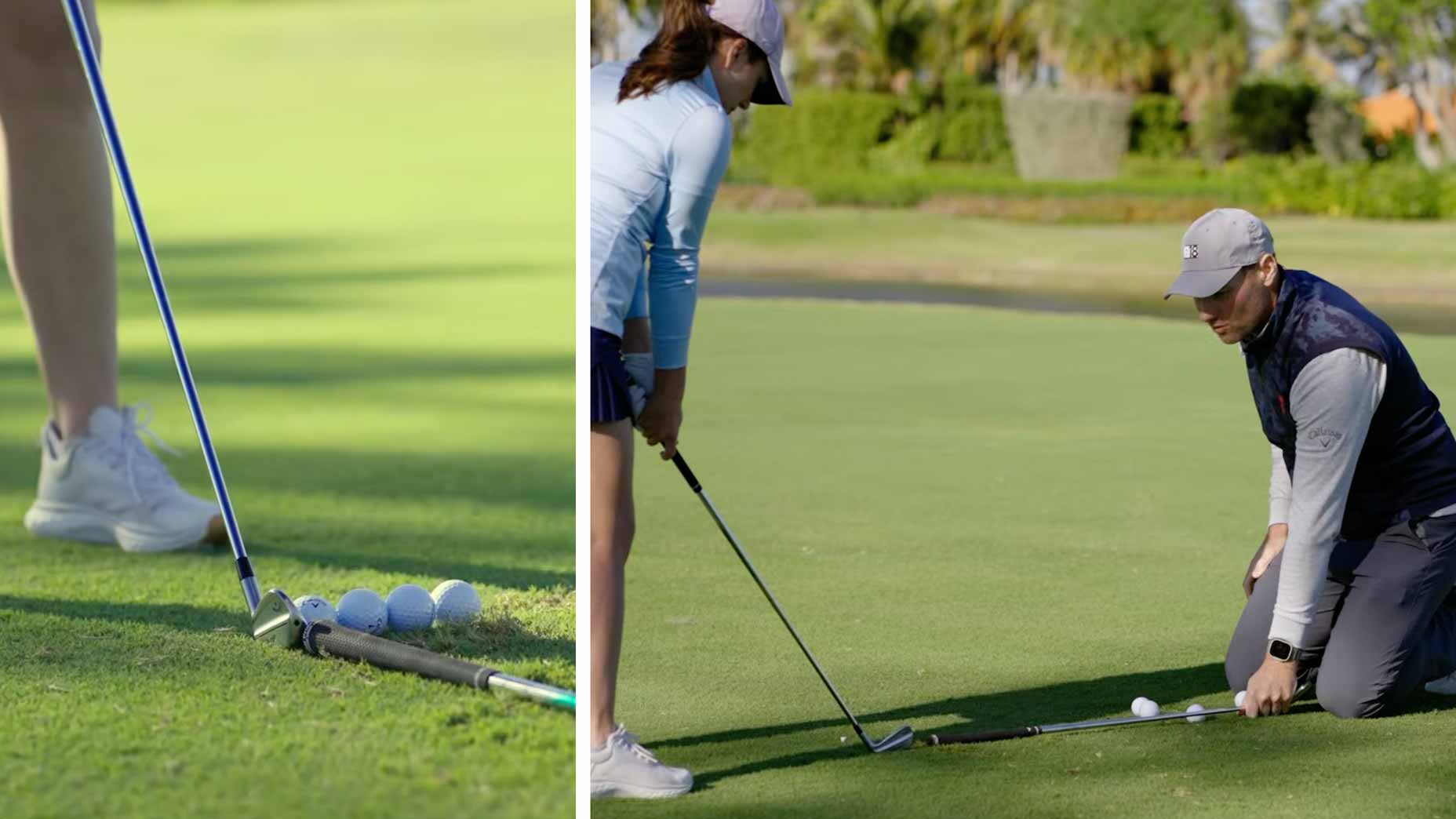
To help rectify these issues, the instructor recommends a straightforward drill aimed at enhancing both alignment and strike:
"Practice hitting shots with a focus on creating a downward angle of attack. Use alignment sticks to ensure your swing path is correct and practice making contact with the ground just before the ball. This not only helps with compression but also improves overall ball striking quality."
— Top Golf Instructor
This drill encourages golfers to concentrate on making solid contact with the ball while maintaining proper angle and body position throughout the swing. By practicing in this manner, players can gradually develop the muscle memory needed for better performance on the course.
What this means for golfers
For many recreational golfers, understanding the mechanics behind iron compression is key to transforming their game. Players often try different clubs or equipment to solve their distance problems without realizing that improving compression can yield more effective results. Golfers should be aware that investing time in practice with a focus on technique can yield significant benefits.
When purchasing new irons, consider how they might enhance your game’s technical aspects. Look for clubs designed with technologies to promote better launch angles and ball speed, but remember that your delivery at impact is what fundamentally affects your performance.
What's next
As players continue to refine their skills and incorporate these techniques into their practice routines, the golf season remains bustling with events providing numerous opportunities to witness the best in action. The upcoming tournaments will serve as an excellent platform for observing the benefits of good compression in professional play. Golfers at all levels should keep an eye on how top players implement compression techniques and consider how those insights could be applied to their own games.
By focusing on proper setup, striking mechanics, and practice drills, golfers can work towards achieving that elusive compression needed for better iron play, ultimately leading to enhanced performance on the course and greater enjoyment of the game.


/https%3A%2F%2Fcdn.pijper.io%2F2026%2F06%2FcV8NSdcBY7eE2A1780686382.jpg)