

Introduction
In the world of golf, the thrill of launching the ball down the fairway with both distance and accuracy is a goal for many golfers. While distance may receive more attention, accuracy remains equally vital for scoring well. By understanding key factors such as tee height, ball position, launch angle, and modern fitting advice, golfers can significantly enhance their performance off the tee. In this article, we will explore the essential elements to maximize your driving distance while maintaining accuracy, alongside specific drills to improve your skills.
Tee height: Finding the sweet spot
Tee height is one of the most straightforward yet often overlooked factors that can influence both distance and accuracy. A higher tee height can help promote a higher launch angle, which is crucial for maximizing distance. However, too high of a tee can lead to mishits and reduced accuracy.
Optimal tee height for distance
When using a driver, the ideal tee height is generally around 1 to 1.5 inches above the ground. This height allows the ball to be struck at the optimal point for an upward launch angle. As a rule of thumb, the top of the driver’s face should align with the equator of the ball when addressing the ball.
Balancing distance and accuracy
While maximizing distance is desirable, it’s crucial to ensure that the tee height does not lead to erratic shots. Experiment with different tee heights during your practice sessions to find the optimal height that provides both distance and control. An effective method is to gradually increase or decrease your tee height while paying close attention to your ball flight and dispersion.
Ball position: The foundation of a successful drive
Ball position at address plays a significant role in determining how well you can connect with the ball. Proper ball placement can impact launch angle, spin, and ultimately distance and accuracy. For a standard driver setup, the ball should be aligned with your lead foot (left foot for right-handed golfers).
Adjusting ball position for distance
To maximize distance, ensure that the ball is positioned forward in your stance. This will allow you to make contact with the ball on an upward angle, which is essential for achieving a high launch and low spin. If you notice that you are consistently hitting the ball low or slicing it, you may need to experiment with shifting the ball slightly back in your stance.
Variability for different conditions
Different conditions, such as wind and course layout, may require adjustments to your ball position. For instance, in windy conditions, you might want to play the ball slightly back in your stance to promote a lower trajectory, reducing the effect of the wind. Practice these adjustments frequently to adapt your game to various situations.
Launch angle: The key to maximizing distance
Launch angle is a critical factor that can impact both distance and accuracy. A proper launch angle can lead to optimal carry distance and roll-out on the fairway. Ideally, you want a launch angle between 12 and 15 degrees for the average golfer, but this can vary based on individual swing characteristics.
Finding your optimal launch angle
To determine your optimal launch angle, consider using launch monitors available at many golf shops and facilities. These devices measure your swing data, including launch angle, ball speed, and spin rate. Work with a professional instructor to analyze this data and make necessary adjustments to your swing mechanics.
Creating a consistent swing path
In addition to launch angle, a consistent swing path enhances both distance and accuracy. Utilize drills that focus on maintaining a neutral swing path. One effective drill is the "gate drill," where you set up two tees slightly wider than your clubhead, forcing you to swing through the gate without hitting the tees. This will help improve your swing path, leading to more consistent ball striking.
Modern fitting advice: Tailoring your equipment
Modern golf club fitting is an essential component of maximizing distance and accuracy. A well-fitted driver can significantly improve your performance by ensuring the correct shaft length, flex, and loft are tailored to your swing.
Understanding shaft characteristics
The shaft of your driver should complement your swing speed and style. A stiffer shaft can help control your shot shape, while a more flexible shaft can increase distance for players with slower swing speeds. Consider a professional fitting to assess your swing and select the best shaft for your needs.
Choosing the right driver head
Driver head technology has come a long way, with adjustable loft and weight distribution becoming standard features. Explore different driver heads and their adjustability to find the best match for your swing. Adjusting loft can help you achieve the desired launch angle, while changing weight distribution can influence the shot shape.
Specific drills to enhance distance and accuracy
To effectively integrate the concepts discussed, here are a few specific drills that can help you maximize both driving distance and accuracy:
1. The alignment stick drill
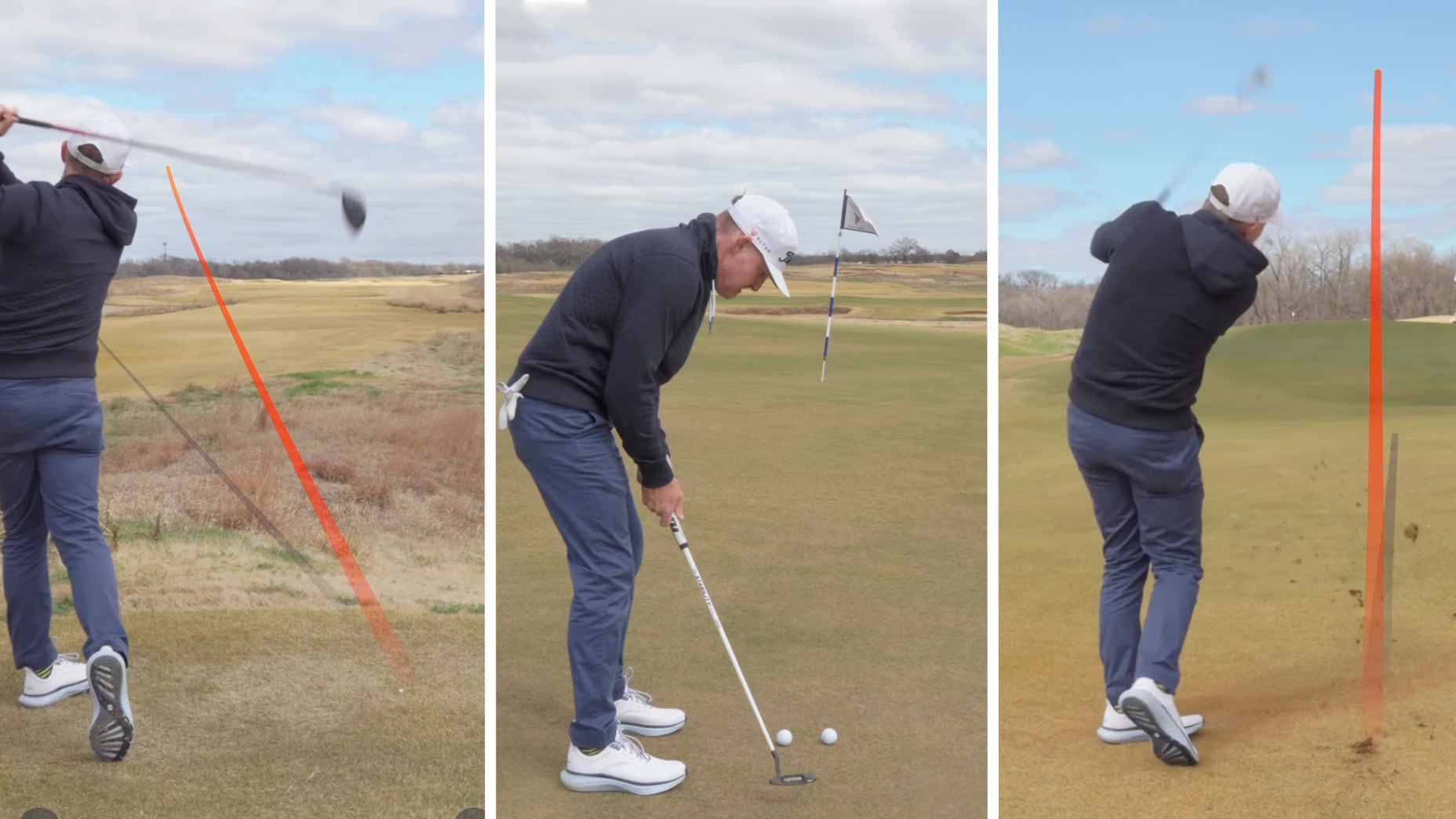
Set two alignment sticks on the ground: one pointing toward your target and the other parallel to your stance. This will help you maintain proper alignment, ensuring your swing path is on target.
2. The slow-motion swing drill
Take your driver and practice making slow, controlled swings focusing on your body mechanics. Pay attention to your weight shift, club path, and follow-through. This exercise will reinforce proper technique without the pressure of hitting at full speed.
3. The impact bag drill
Using an impact bag, practice striking it with your driver to build muscle memory and feel. Focus on making contact with the ball at the correct launch angle and swing path, enhancing both distance and accuracy.
Conclusion
Maximizing driving distance and accuracy is a multifaceted endeavor that requires attention to detail and practice. By focusing on tee height, ball position, launch angles, modern fitting techniques, and implementing specific drills into your routine, you can unlock your potential on the golf course. Remember, consistent improvement takes time, so be patient and enjoy the journey to becoming a better golfer.