Golf in Dublin & the East of Ireland: A Planning Guide
Dublin & East
What golf here is actually like
Golf around Dublin is a study in contrast. Within a short drive of a capital city you have championship links running along the Irish Sea, tidy parkland clubs tucked into the suburbs, and no-frills members' courses in the hills to the south. The east coast is Ireland's most accessible golf, which cuts both ways: the best courses are famous and busy, but you can base yourself in one place, drive nothing further than an hour, and play a genuinely varied week without ever repeating a style of course.
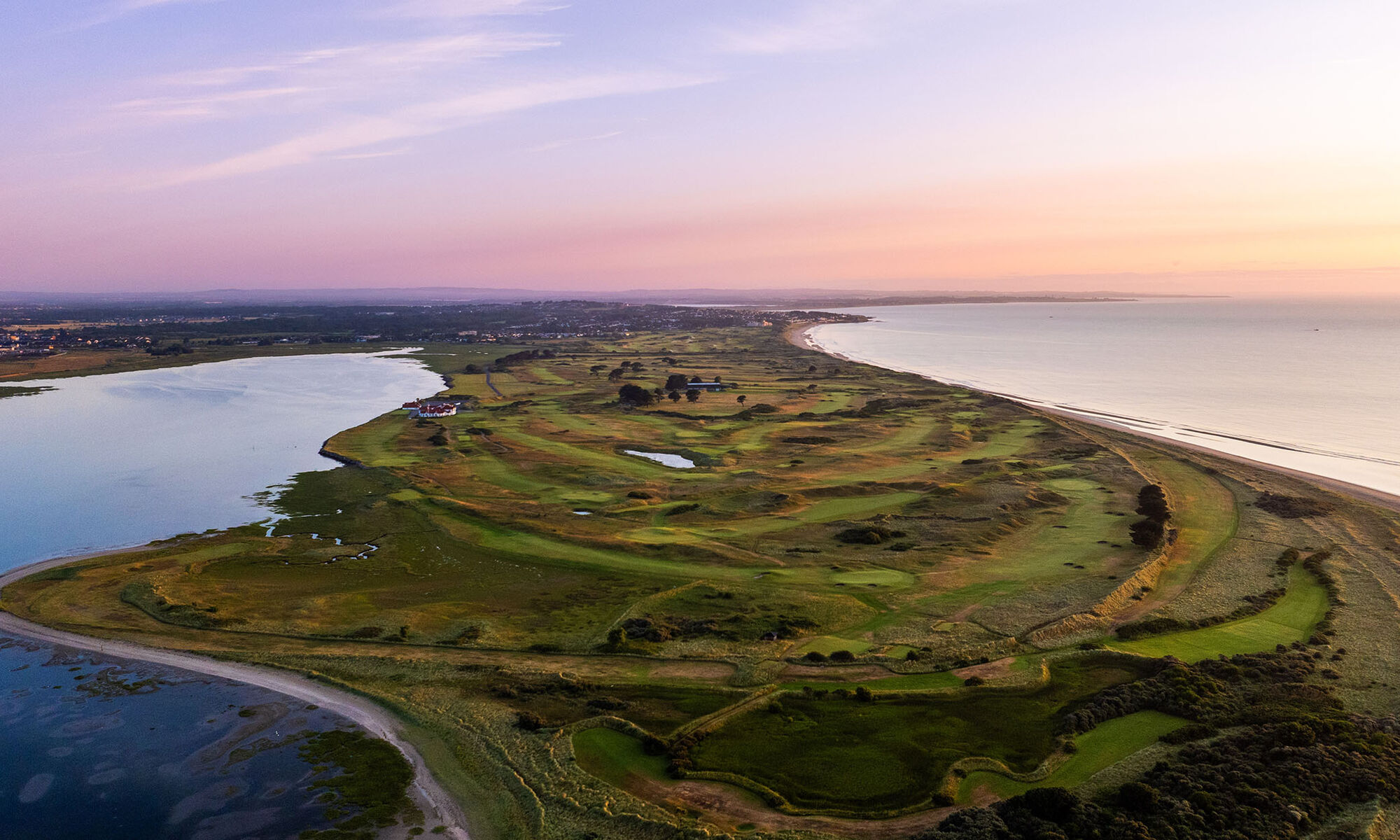
The signature experience is the links north of the city, on the sandy Donabate and Portmarnock peninsulas. This is firm, wind-exposed golf on natural duneland, and it is the reason most travelling golfers come here. But the region is deep enough that you can round out a trip with mature parkland inside the city and rougher-edged tracks in the Dublin Mountains.
When to go
The playable season on the east coast runs roughly from April to October, with the sweet spot in late spring and early autumn. May, June and September tend to give you the best combination of firm turf, long daylight and manageable green fees. Midsummer brings the longest days — you can tee off late into the evening in June and July — but it is also peak season, so the marquee links get booked well ahead.
Dublin sits on the drier, eastern side of Ireland, which works in your favour. It gets noticeably less rain than the west coast, and the links land drains fast, so a wet morning rarely ruins a round. That said, this is still Ireland: pack for wind and showers in any month, and treat a still, sunny day as a bonus rather than a plan.
Winter golf is possible on the better-draining links and parkland courses, but daylight is short, conditions are raw, and some clubs move to temporary greens. If you are travelling specifically to play, aim for the shoulder months. Low season means easier tee times and quieter courses, but the trade-off is weather variability and shorter days.
The courses worth planning around
The links north of the city
This is where you build the trip. The Donabate and Portmarnock peninsulas hold a concentration of true links golf that few city regions anywhere can match.
Portmarnock Golf Club is the headline. One of Ireland's most storied links, it plays out on a low, exposed spit of land where the wind is a constant negotiating partner and the routing rarely gives you two consecutive holes in the same direction. It is a course that rewards ball control over power, and it belongs on any serious golfer's east-coast itinerary.
Next door, Portmarnock Links offers a second, distinct take on the same terrain — modern links golf on the peninsula, and a natural pairing with a round at the older club. Playing both on the same peninsula makes for an efficient, high-quality day.
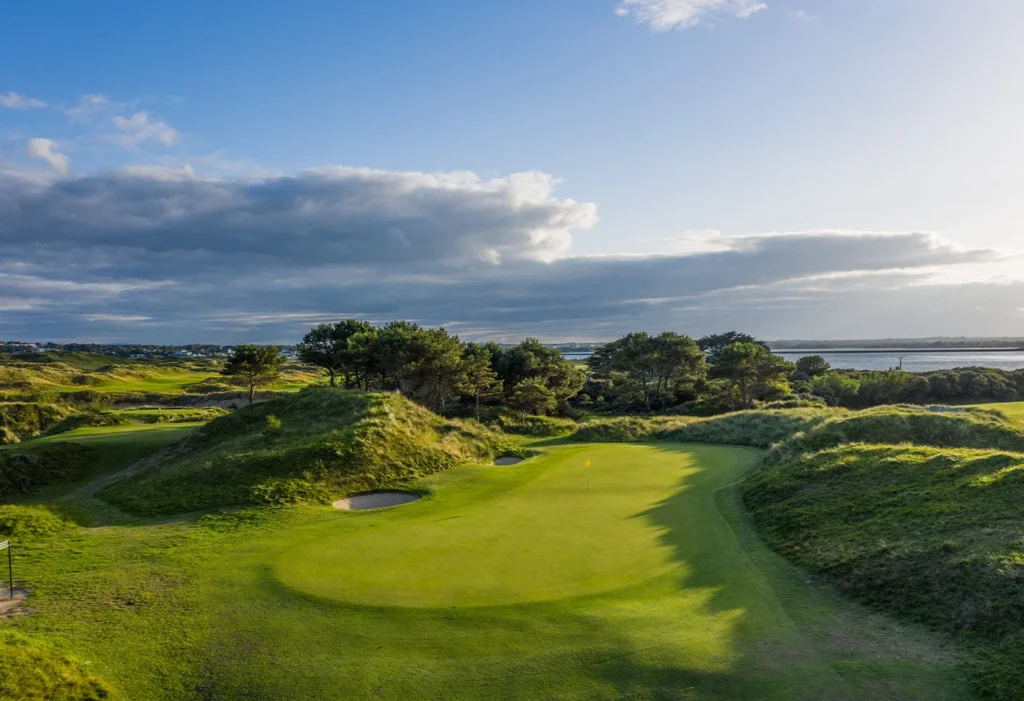
The Island Golf Club in Donabate is the third pillar. Set among some of the tallest, most dramatic dunes in the region, it is a links of blind shots, tumbling fairways and framed greens — a genuinely memorable round and, for many, the one they talk about afterwards. If you play one course north of Dublin beyond Portmarnock, make it this.
Around these, Donabate gives you options that keep a trip flexible. Corballis Golf Course and Balcarrick Golf Club, both on the Corballis/Donabate side, are useful for an extra round or a warm-up without the pressure or the price of the championship links. Donabate Golf Club rounds out the cluster, keeping everything within a tight geographic pocket.
Parkland inside and near the city
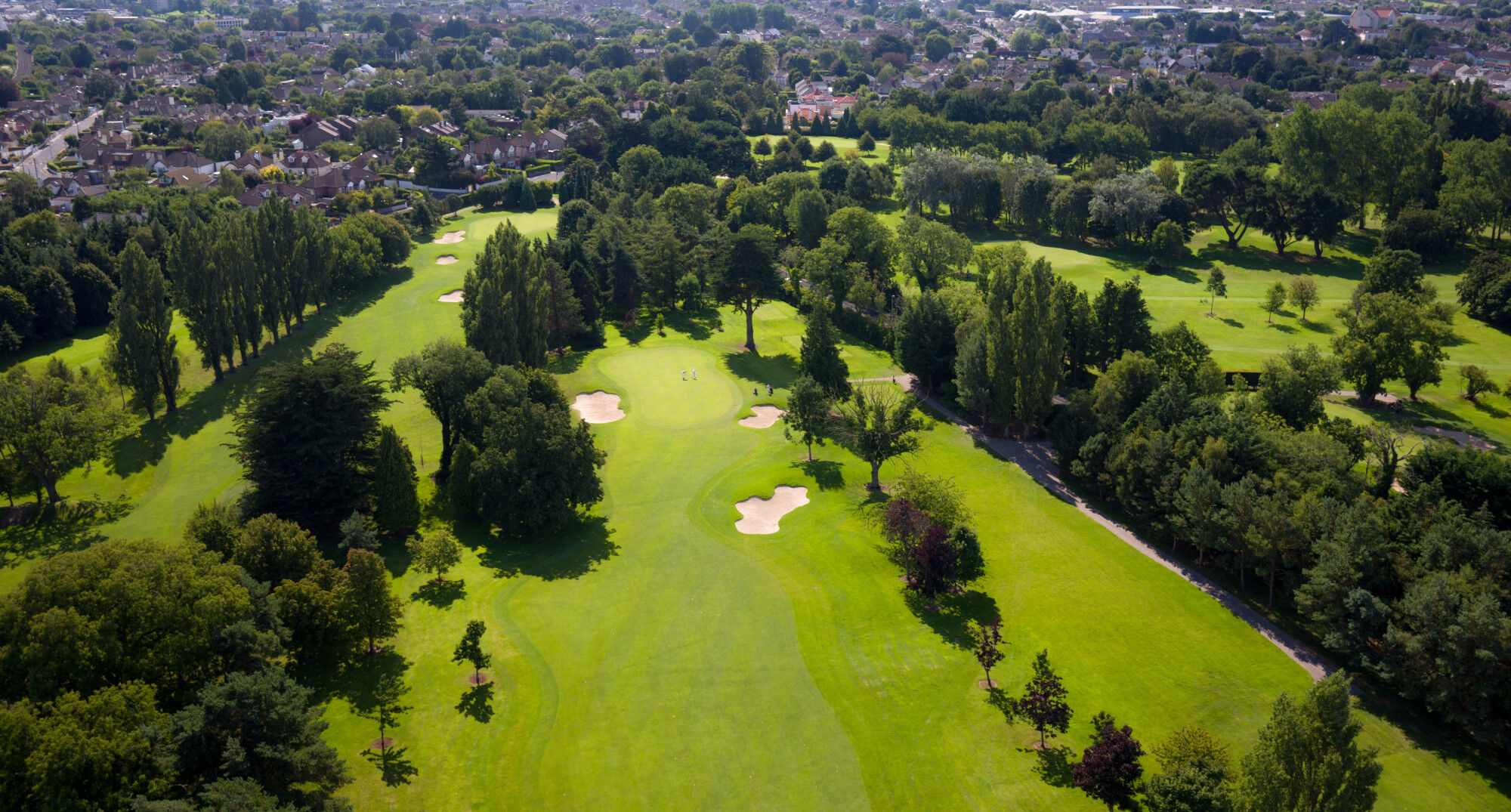
When you want a break from the wind, Dublin's parkland clubs deliver mature, sheltered golf minutes from the centre.
- Milltown Golf Club — an established parkland course inside Dublin itself, handy if you are staying in the city and want to play without a long drive.
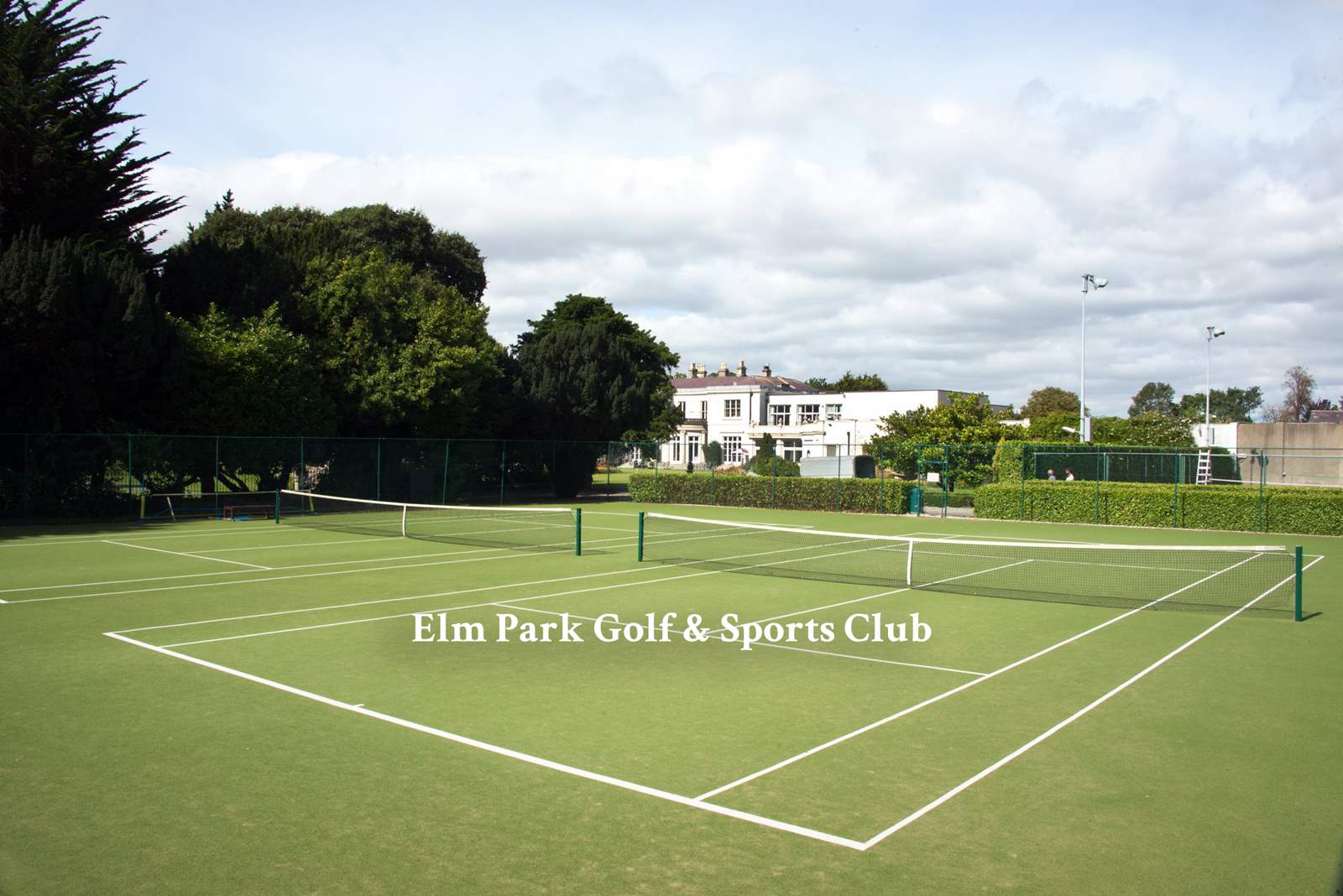
- Elm Park Golf and Sports Club — a well-kept parkland club close to the southside, easy to slot in around city sightseeing.
- Clontarf Golf & Bowling Club — arguably the most convenient of all, sitting close to the city on the north side, a genuine urban golf course.
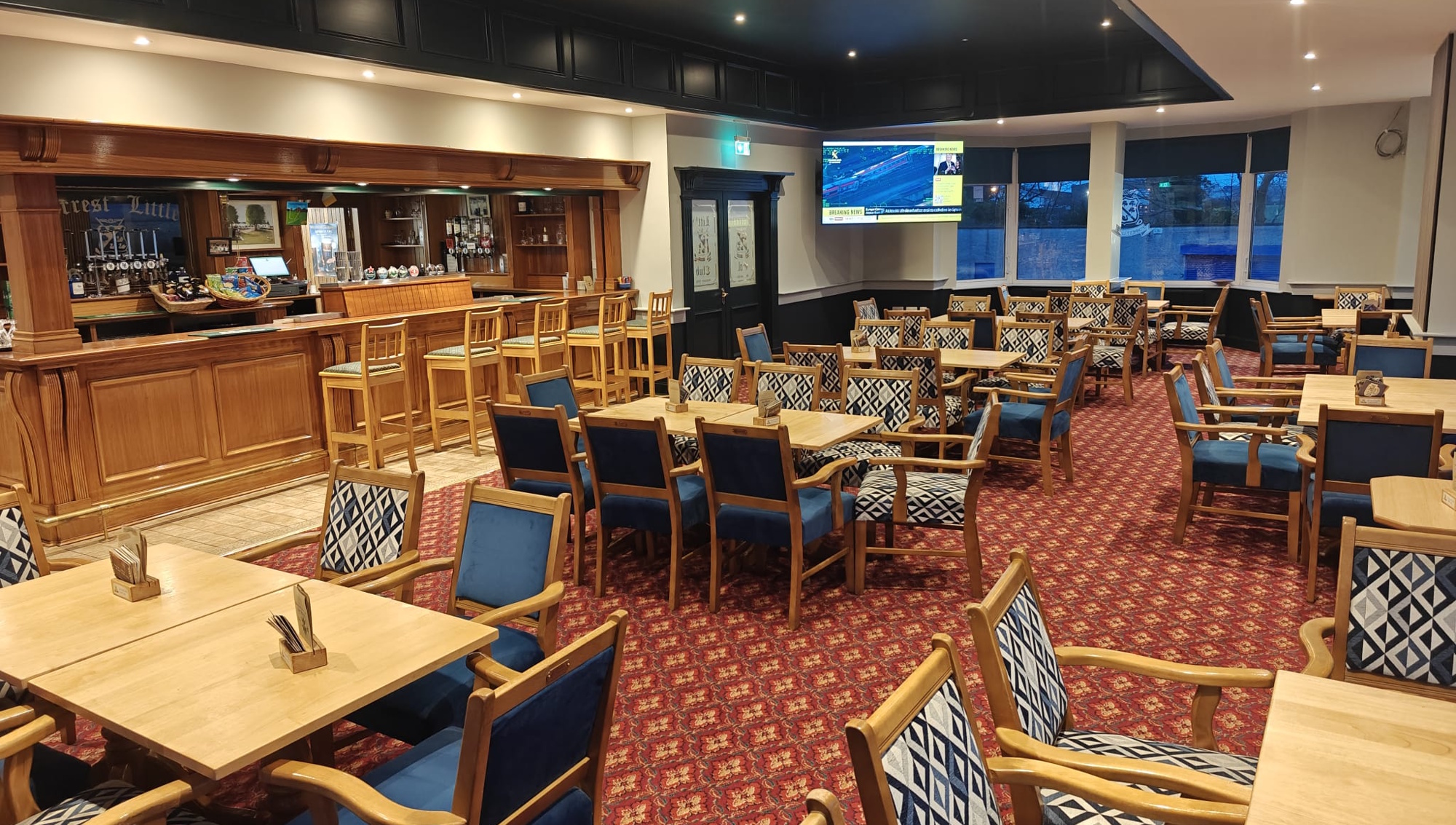
- Forrest Little Golf Club in Swords — parkland right beside the airport corridor, which makes it a smart choice for an arrival-day or departure-day round.
- Beech Park Golf Club — a quieter parkland option away from the coast for a relaxed round.
The hill courses to the south and west
The Dublin Mountains and the western fringe hold a set of honest members' clubs that give a trip texture. Slade Valley Golf Club and Ballinascorney Golf Club sit in the higher, rolling country to the southwest, while Hazel Grove Golf Club offers another unpretentious round away from the coastal crowds. None of these are the reason you fly to Dublin, but they are the kind of course that makes a week feel local rather than packaged, and they tend to be friendlier on the wallet and easier to book.
Practical matters
Getting here is the easy part. Dublin Airport is well connected across Europe, North America and the UK, and — crucially for golfers — it sits on the north side of the city, right beside the links belt. Swords, Donabate and Portmarnock are a short drive from the terminal, so you can land and be on a first tee the same day, or play near the airport before an evening flight home.
A car is close to essential. The parkland clubs are reachable by public transport in some cases, but linking the northern links, the city parklands and the southern hill courses over a few days only makes sense with a car. Distances are short by international standards: the whole region is comfortably driveable within an hour, and the northern links cluster is far tighter than that — you can play two peninsula courses in a day without a long transfer between them.
Basing yourself is a choice between two logics. Stay in central Dublin and you get the city — food, pubs, culture, easy access to the parkland courses — with a manageable drive north for the links. Stay out around Portmarnock, Donabate or Swords and you trade nightlife for being on the doorstep of the best golf, with the airport minutes away. For a golf-first trip, the northern base wins; for a mixed trip with non-golfing company, the city makes more sense.
A typical week here looks like a couple of championship links days on the peninsulas, a parkland round or two inside the city when the wind is up, and perhaps a relaxed round on one of the hill or Donabate courses to fill a gap. Book the marquee links — Portmarnock, Portmarnock Links, The Island — well in advance for high season; the members' clubs and parklands are far more flexible.
Who this suits — and who it doesn't
This region is ideal for the golfer who wants championship links without a long rural drive, and who values being able to combine golf with a real city. It suits groups on a short trip, players flying in for a few days who don't want to lose a day to transfers, and anyone who wants both links and parkland in one base.
It suits couples and mixed groups particularly well, because the non-golf offering — Dublin itself — is genuinely good, and the courses are close enough that a golfer can play and be back for dinner.
It suits less well the traveller chasing a remote, one-course-town links pilgrimage; the far west and southwest of Ireland do that better. And if your idea of a golf trip is total quiet and empty courses, the fame and accessibility of the top east-coast links work against you in peak months. Come in the shoulder season, base yourself north, and this is one of the most efficient high-quality golf trips in Ireland.