Golf in Madrid: A Practical Guide to Playing Around the Spanish Capital
Madrid
What golf in Madrid is actually like
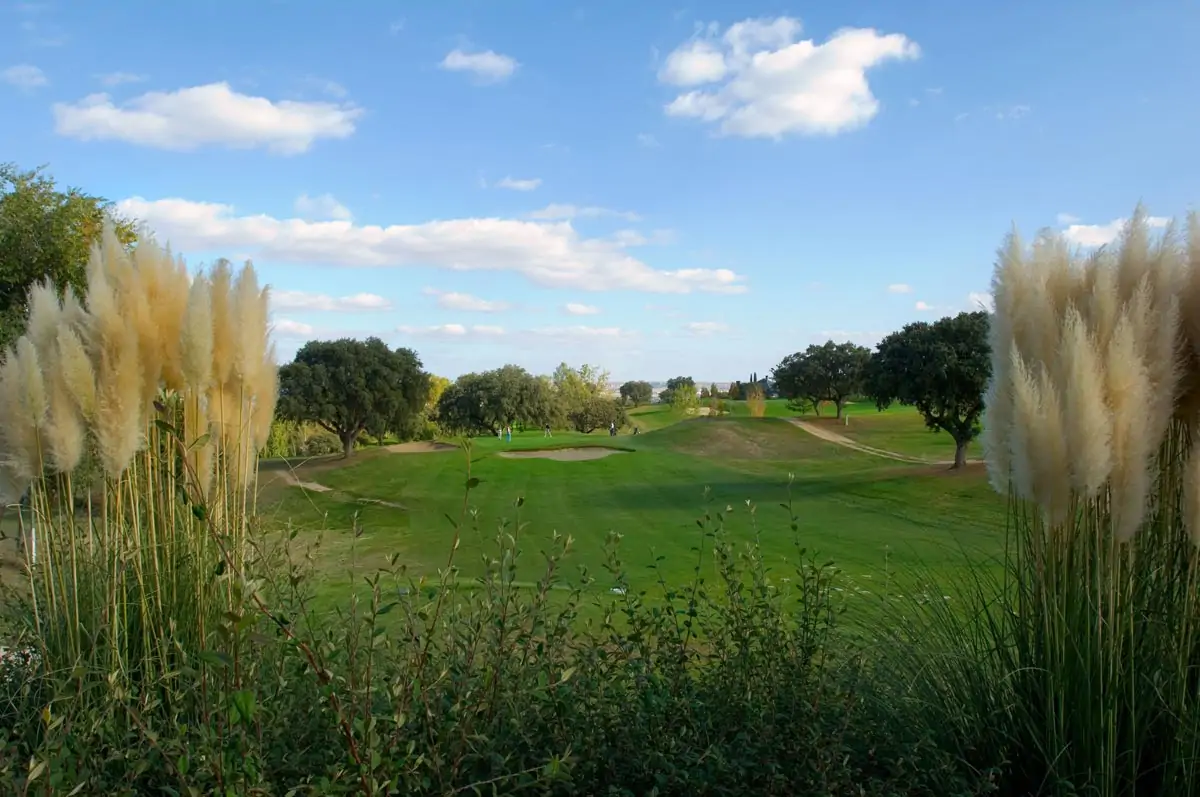
Madrid is not a golf-resort destination in the way the Costa del Sol or the Algarve are. It is a major capital city that happens to have a dense ring of golf courses around it, most of them used week in and week out by locals rather than by visiting fourballs. That changes the character of a trip here. You come to Madrid for the city first — the Prado, the food, the tapas crawls in La Latina, the late dinners — and you fit golf around it. The upside is that the golf you do play is genuine parkland golf on courses that hold up to regular members' scrutiny, set against the high, dry plateau of central Spain and often with the Sierra de Guadarrama on the horizon.
The courses sit at altitude. Madrid is roughly 650 metres above sea level, and that has two effects worth knowing: the ball flies a little further than you expect, and the weather swings harder between seasons than a coastal Spanish resort would. This is inland, continental golf, not seaside links.
When to go
The sweet spots are spring and autumn. April, May, early June, September and October give you warm, stable, largely dry days without the brutality of high summer. These are the months to plan a golf-and-city trip around.
Summer — July and August — is genuinely hot on the Meseta, regularly pushing well past 35°C, and the middle of the day becomes unpleasant for walking 18 holes. If you travel then, play early-morning tee times and treat the afternoons as pool-and-siesta time, which is exactly what Madrileños do. The flip side is that August empties the city out, so courses and tee sheets are quieter.
Winter is playable but variable. Madrid gets cold, crisp mornings and the occasional frost delay, and the Sierra to the north holds snow. Days are often bright and blue, though, and you can get very pleasant winter rounds if you start later in the morning once the ground has thawed. Rain is concentrated in the cooler months but never dominant — this is one of the drier capitals in Europe.
Because most of these clubs run on membership rather than tourism, visitor availability is best mid-week and can tighten at weekends when members are out. Book ahead and be flexible on times.
The courses worth planning around
The established names
The most recognisable golf around Madrid is at La Moraleja, in the affluent Alcobendas district north of the city. There are two courses in the data here — Golf La Moraleja 1 and Golf La Moraleja 2 — and this is the pedigree address of Madrid golf, a private club environment with mature, well-conditioned parkland. If you can arrange access, it is the closest thing to a marquee round in the region.
Club de Campo Villa de Madrid is the other heavyweight and arguably the one to prioritise. It sits closest to the city itself and is a large, long-standing sports complex with serious golf pedigree — the kind of course that has hosted top-level competition. For a visitor who wants one round that feels like the real Madrid golfing establishment, this is a strong pick and it is the easiest of the big names to reach from the centre.
The western belt
A cluster of courses sits west and north-west of the city, out towards the commuter towns and the foothills of the Sierra:
- Club de Golf La Dehesa in Villanueva de la Cañada — a solid, well-regarded parkland layout in an area thick with golf.
- Nuevo Club de Golf de Madrid at Las Matas — long-established and convenient off the A-6 corridor heading toward the mountains.
- Forus Golf Las Rejas in Majadahonda — handy if you are basing yourself in the western suburbs.
- Asociación de Golf Villa de El Escorial, out at El Escorial — worth pairing with a visit to the vast royal monastery of San Lorenzo de El Escorial, one of the best day trips from the capital. Golf plus history makes for a good day here.
North and east
North of the city, Jarama RACE Club in San Sebastián de los Reyes shares its site with the historic Jarama motor-racing circuit — an unusual combination and an easy run up the A-1. Retamares Casino Club de Golf at Valdeolmos-Alalpardo sits a little further out in the same northern quadrant.
To the east, along the Corredor del Henares toward Guadalajara, you have El Encín Golf at Alcalá de Henares — again a place to combine golf with sightseeing, as Alcalá is a UNESCO-listed university town and the birthplace of Cervantes. Golf Negralejo at Rivas Vaciamadrid and Cabanillas Golf Club further east round out this side.
South
South of Madrid toward Toledo, Señorío de Illescas Club de Golf in Illescas is the natural stop if you are heading that direction — convenient for anyone combining Madrid with a Toledo day.
Practical matters
Getting to Madrid is the easy part. Barajas (Adolfo Suárez Madrid–Barajas) is one of Europe's major hubs, well connected across the continent and beyond, and it sits on the north-east side of the city — the same side as several of the courses. High-speed AVE rail links Madrid to Barcelona, Seville, Málaga and beyond if you are stitching together a wider Spanish trip.
The critical logistical fact for a golf trip: the courses are scattered in a ring around the city, not clustered in one golf zone. La Moraleja and Jarama are north, El Escorial is out west toward the mountains, Illescas is south toward Toledo, and El Encín and Cabanillas are east. There is no single base that puts everything within a short drive, so a hire car is close to essential if you want to play several courses. Madrid's ring roads (the M-30, M-40, M-45 and M-50) and radial motorways make the driving straightforward once you accept the sprawl, but reckon on 30–60 minutes to reach most courses depending on where you stay and traffic.
A realistic Madrid golf trip looks like this: base yourself in the city for culture, food and nightlife; pick two or three courses on the same side of town to avoid crossing the whole metropolis; and treat golf as a morning activity, with afternoons free for the city. Because the clubs lean private and members-first, sort out access and tee times in advance rather than turning up. Green fees are not published in the data here, so budget on the assumption that the marquee clubs cost more than the outlying commuter-belt courses — confirm rates directly when you book.
Who this destination suits — and who it doesn't
Madrid suits the golfer who wants a proper city break with golf woven through it. If your ideal trip is world-class museums, a genuinely great food scene and long evenings, with three or four rounds slotted in around it, this is an excellent choice — and it works especially well for couples or groups where not everyone is playing every day.
It also suits travellers already coming to Madrid for other reasons who want to play while they are here, and anyone who prefers established members' parkland over manufactured resort layouts.
It does not suit the buggy-to-bar golf-resort crowd who want to walk out of the room, onto the first tee, and never touch a car. There is no single golf complex to settle into here, and the driving between courses is real. It is also the wrong pick for peak July and August unless you commit to dawn tee times, and it is not the destination for guaranteed walk-up access — the membership-led model rewards planning. Come for the combination of a great city and solid, altitude-tinged parkland golf, plan the logistics honestly, and Madrid delivers.