
Golf in South West England: A Practical Guide to Cornwall and Devon
South West England
What golf here is actually like
The South West of England — Cornwall and Devon, essentially — is a golf trip built around coastline and moorland rather than manicured resort sprawl. This is the country's holiday corner, and the golf reflects that: windswept links near the beaches, parkland tucked into rolling green valleys, and a couple of properly wild moorland courses on the fringes of Dartmoor. Expect firm, breezy conditions by the sea and softer, greener going inland. It is a region you drive through slowly, on lanes that were never designed for haste, playing a round in the morning and being on a beach or in a pub by late afternoon.
The golf is honest and often more testing than the holiday atmosphere suggests. Wind is the defining variable on the coast, and the older links can humble anyone who assumes a seaside course is a soft option. Inland, the terrain does the work: valleys, elevation and mature trees shape the challenge more than length does.
When to go
Late spring through early autumn is the sweet spot. May, June and September are the pick: long daylight, generally drier weather, and courses that have shaken off winter but not yet hit the peak-season crowds. July and August bring the best odds of sun but also the full weight of British holiday traffic — Cornwall in particular becomes very busy, roads clog, and tee times at the better-known clubs get harder to secure. Book well ahead if you must travel then.
The South West has one of the mildest climates in the UK, which means winter golf is genuinely playable. Coastal links drain well and stay open when inland courses further north are frozen. The trade-off is short days, real Atlantic wind and the chance of long wet spells. Moorland courses near Dartmoor sit higher and feel the weather more acutely — a fine spring day in Exeter can be a raw one at altitude.
Shoulder season also helps the wallet and the availability. If your priority is playing the marquee courses without a scrum, aim for a weekday in May or September.
The courses worth planning around
The Cornwall links and coast
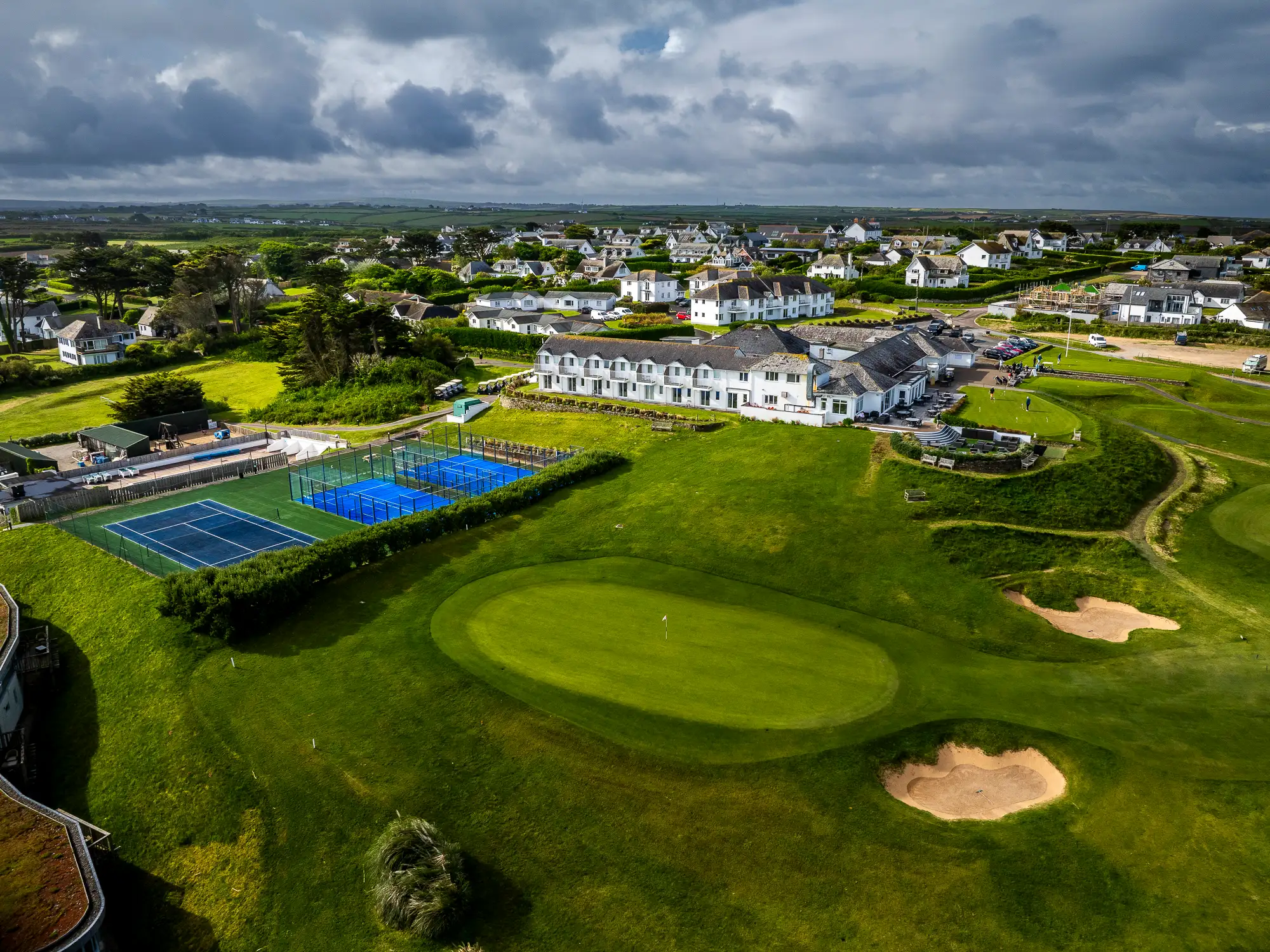
Trevose Golf & Country Club near Padstow is the natural anchor for a Cornish trip. It sits on the north coast in classic holiday-golf country, with the kind of coastal setting and self-contained club feel that makes it easy to base yourself there for several days. It is the name most visiting golfers build around, and rightly so.
Perranporth Golf Club is the connoisseur's choice on the same stretch of coast. This is old-school, tumbling links land — big dunes, blind shots, springy turf — and it demands imagination and a tolerance for the wind. If you love genuine links golf with character over polish, put it high on the list.
Tehidy Park Golf Club near Camborne offers a change of pace: parkland further inland, a good counterpoint on a day when the coast is being battered. The Carlyon Bay Hotel Golf Club at St Austell gives you clifftop, sea-view golf attached to a hotel, which makes it a convenient stay-and-play option on the south Cornish coast. Trethorne Golf Club and Trevose together with Perranporth form a workable Cornish cluster if you want variety without long transfers.
Bodmin and the Cornwall interior
Lanhydrock Hotel & Golf Club near Bodmin is a good hub for exploring both coasts, sitting more centrally in the county with hotel accommodation on site. It works well as a base for a trip that mixes links and parkland rather than committing fully to the dunes.
Devon: moorland and parkland
Cross into Devon and the character shifts. Bovey Castle Golf Course at North Bovey is the standout name — a parkland-and-moorland course set within a grand estate on the edge of Dartmoor, and the sort of place where the surroundings are half the appeal. Nearby, Bovey Tracey Golf Club and Stover Golf Club (Newton Abbot) give you a tight trio in the same corner of south Devon, easy to string together over a couple of days.
Tavistock Golf Club sits on the western flank of Dartmoor and delivers proper moorland golf with the elevation and views that implies. Fingle Glen Golf Club and Exeter Golf and Country Club put you within easy reach of Exeter, the region's main city and its transport gateway, making them practical for the start or end of a trip. Staddon Heights Golf Club in Plymouth and Holsworthy Golf Club in the north, near the Cornwall border, round out the Devon options for anyone routing across the region rather than staying in one spot.
Practical matters
The single most important thing to understand about a South West golf trip is distance and driving time. The region is long and thin, the motorway (the M5) only reaches as far as Exeter, and beyond that you are on A-roads and country lanes. Cornwall's north and south coasts are close as the crow flies but slow to drive between, and summer traffic makes everything worse. Plan your itinerary as a rough line rather than a series of daily out-and-backs.
- Getting there: Exeter is the practical entry point by road and rail, with Exeter Golf and Country Club and Fingle Glen close by. Newquay in Cornwall has an airport for those flying in and heading straight for the coast. Most visitors drive — a car is essentially mandatory here.
- How the trip splits: A natural structure is a Devon leg around Dartmoor (Bovey Castle, Bovey Tracey, Stover, Tavistock) and a Cornwall leg on the coast (Trevose, Perranporth, Carlyon Bay), with Lanhydrock or Trethorne as a bridge in between. Trying to do all of it in a few days means too much time in the car.
- Staying: Several clubs here are hotels in their own right — Bovey Castle, Carlyon Bay, Lanhydrock and Trevose among them — which lets you cut driving to near zero for part of the trip and play from the door.
- Booking: In peak summer, reserve tee times and accommodation early, especially in Cornwall. In May, June and September you have far more flexibility.
A typical trip runs four to seven days: base for two or three nights in Devon around Dartmoor, then move west into Cornwall for the links and the coast. Build in non-golf time — this is a region people bring families to, and the beaches, coast paths and food are a genuine draw between rounds.
Who it suits — and who it doesn't
This destination rewards golfers who like variety and scenery over a single high-octane style of course. If you want links one day, moorland the next and estate parkland the day after, the South West delivers that within a manageable footprint. It suits players who don't mind wind, who enjoy older, characterful courses like Perranporth, and who are happy to fold golf into a broader holiday of coast and countryside.
It suits couples and families particularly well, because the non-golf offer is strong and several clubs double as good bases for a wider trip.
It is less ideal for anyone chasing a tight, walkable cluster of championship venues with minimal transfers — the geography simply doesn't allow it, and the driving is real. It is also a harder sell in deep winter for a dedicated trip: the coast stays playable, but short days and Atlantic weather narrow your window. And if you insist on flawless resort conditioning and modern layouts above all else, some of the region's charm — the wildness, the age, the exposure — may read as rough around the edges rather than characterful. Come for that character, though, and the South West is one of England's most rewarding golf regions.