Golf on the Lisbon Coast: A Practical Guide to Playing Around the Portuguese Capital
Lisbon Coast
What golf on the Lisbon Coast is actually like
The Lisbon Coast is one of the few golf destinations in Europe where you can play a genuine links-influenced course over Atlantic dunes in the morning and be sitting in a proper capital city by dinner. That combination is the whole pitch. This is not a self-contained golf resort bubble like parts of the Algarve; the courses are scattered across three distinct zones around Lisbon, and a trip here is as much about the region as the golf.
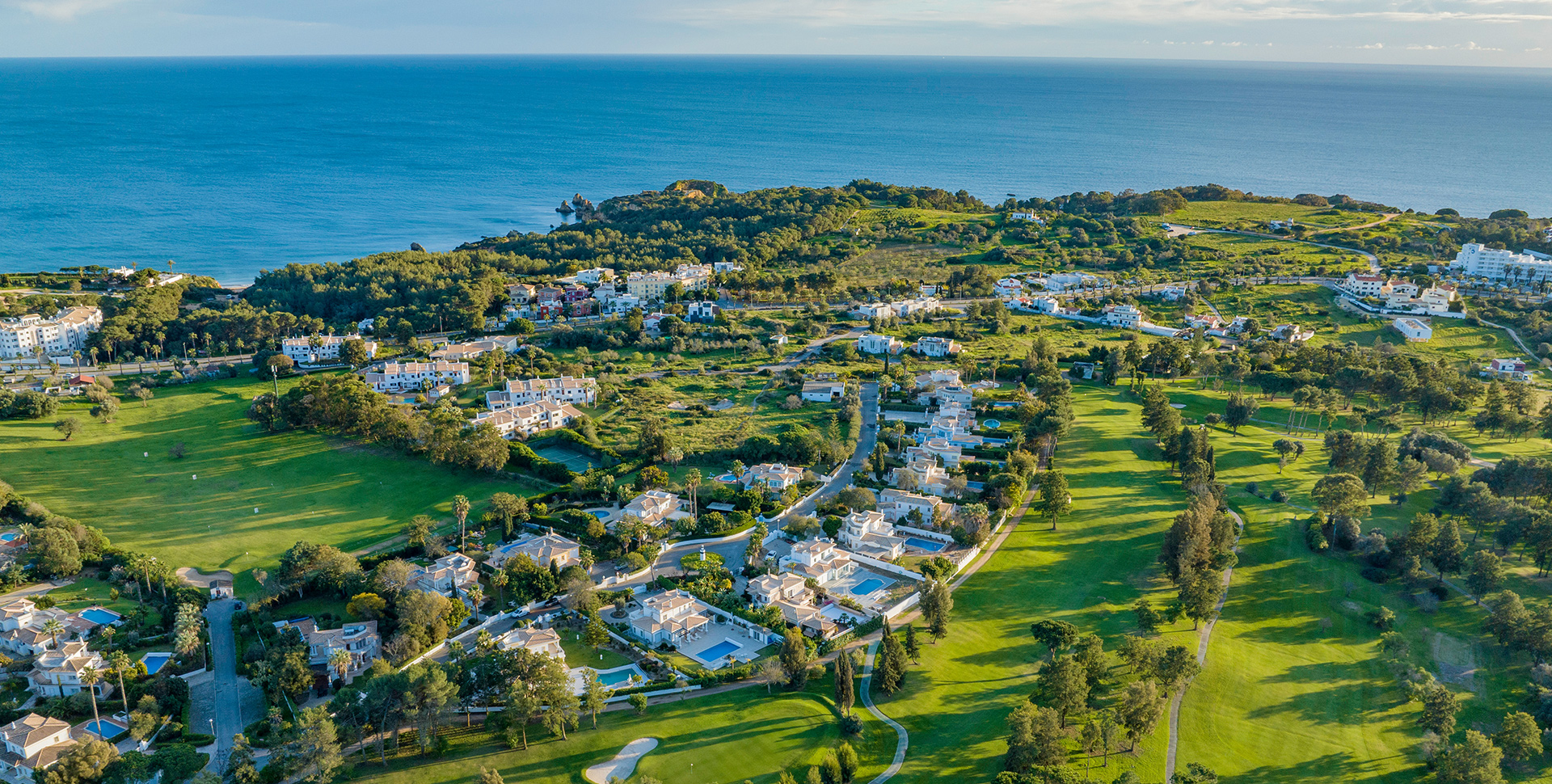
Broadly, you're looking at three clusters. West of the city, around Cascais and Sintra, sits the highest concentration of well-known courses and the coastline that draws most visitors. South across the Tagus, the Caparica and Setúbal peninsula areas offer quieter, often better-value golf. And to the north and inland there are a handful of courses that reward golfers willing to drive a little. The terrain ranges from windswept oceanfront to pine forest to rolling hills, so the golf never feels repetitive.
When to go
The Lisbon Coast has one of the kindest golf climates in Europe. Spring (March to May) and autumn (September to October) are the sweet spots: warm, dry, long daylight, and courses in good condition after or before the summer stress. These are the months worth booking ahead for, because they coincide with peak demand from northern European visitors escaping their own weather.
Summer (June to August) is hot and reliably dry inland, but the coast benefits from Atlantic breezes that keep Cascais and Sintra more comfortable than the interior. The trade-off is wind, particularly on the exposed oceanfront courses, and busier tee sheets thanks to the general tourist high season in Lisbon itself. Early-morning tee times are your friend here.
Winter (November to February) is the low season and the region's quiet secret. Daytime temperatures are mild, rain comes in spells rather than settling in, and green fees and availability both ease considerably. You'll get the occasional washout, but plenty of playable, uncrowded golf. If flexibility matters more than guaranteed sunshine, winter is a strong value play.
The courses worth planning around
Cascais and the Atlantic edge
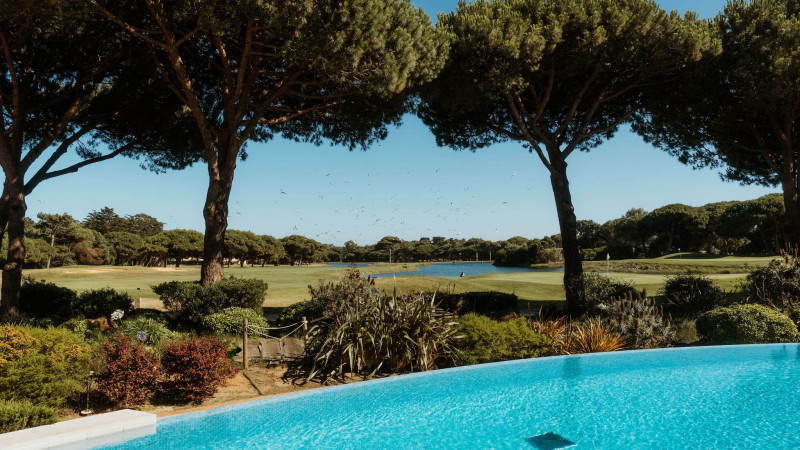
The flagship is Oitavos Dunes in Cascais, an oceanfront layout that runs through dunes and umbrella pines with the Atlantic and the Sintra hills as backdrop. It's the course most golfers build a Lisbon trip around, and it plays firm and exposed when the wind is up — bring your links game and expect to think about ball flight rather than just distance.
Just along the coast, Golfe Quinta da Marinha in Cascais is a more resort-style proposition, gentler in character but with sea glimpses and a convenient location for anyone basing themselves in the Cascais–Estoril strip. Nearby, the Estoril Palácio Golf Course is the region's grand old name — a mature, tree-lined parkland course with a classic, tight, positional feel that rewards accuracy over power. It's a very different day out from the dune courses, and worth including precisely for that contrast.
Sintra's hills and forest
Inland from the coast, the Sintra area brings elevation, greenery and a cooler microclimate. Penha Longa in Linhó is the standout — a hilly, dramatic course set in wooded country near the Sintra mountains, with real changes in elevation and a strong sense of place. Belas Clube Campo Golf Course in Sintra is another substantial hillside layout, generous in scale and framed by the surrounding landscape.
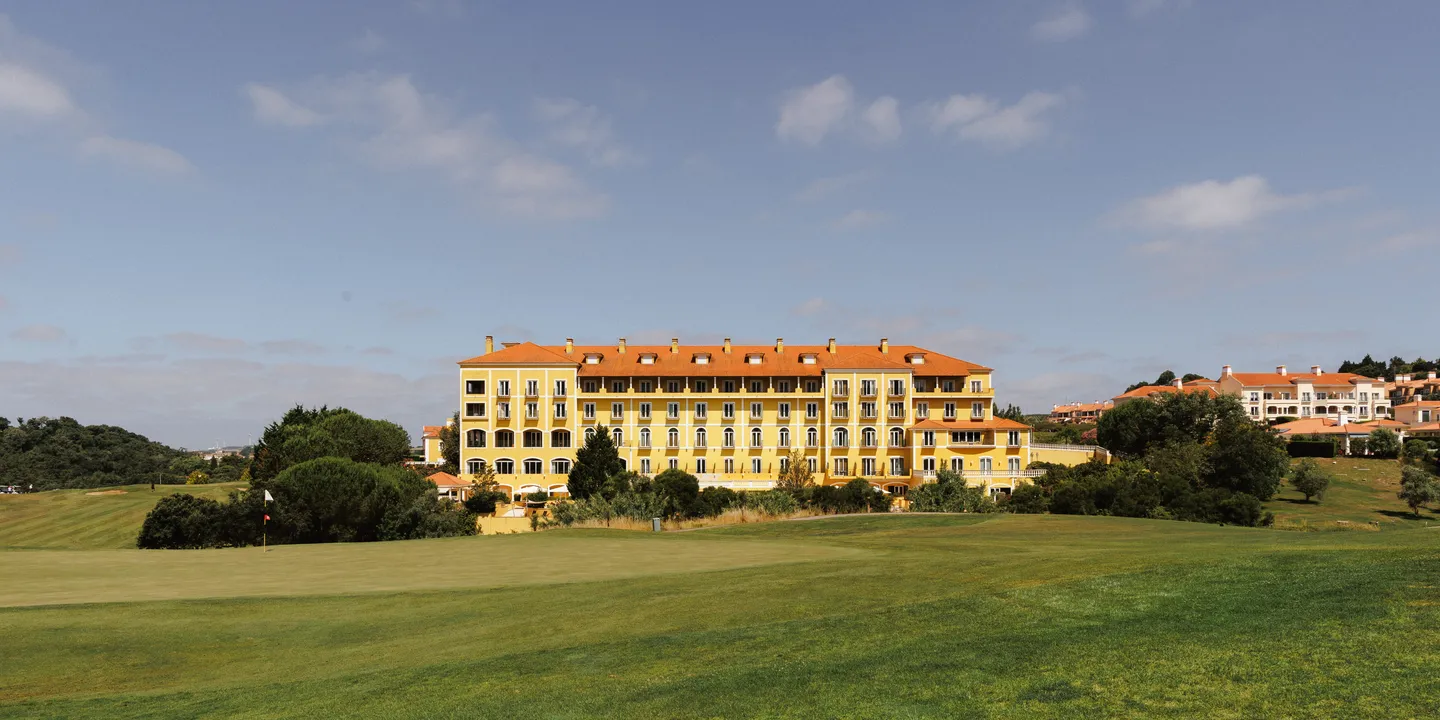
For golfers who want their days a little more relaxed, Beloura Pestana Golf at Quinta da Beloura sits within a residential resort setting and plays more forgivingly, which makes it a sensible choice for mixed-ability groups or a lighter round between the tougher tests.
South of the Tagus and the Setúbal peninsula
Cross the river and the golf gets quieter and, generally, better value. Quinta do Peru Golf & Country Club near Quinta do Conde is a well-regarded parkland course and a favourite of golfers who prefer their rounds without the coastal crowds. PGA Aroeira 2 Golf Course at Charneca da Caparica runs through classic umbrella-pine forest — quiet, tree-framed and a genuine test.
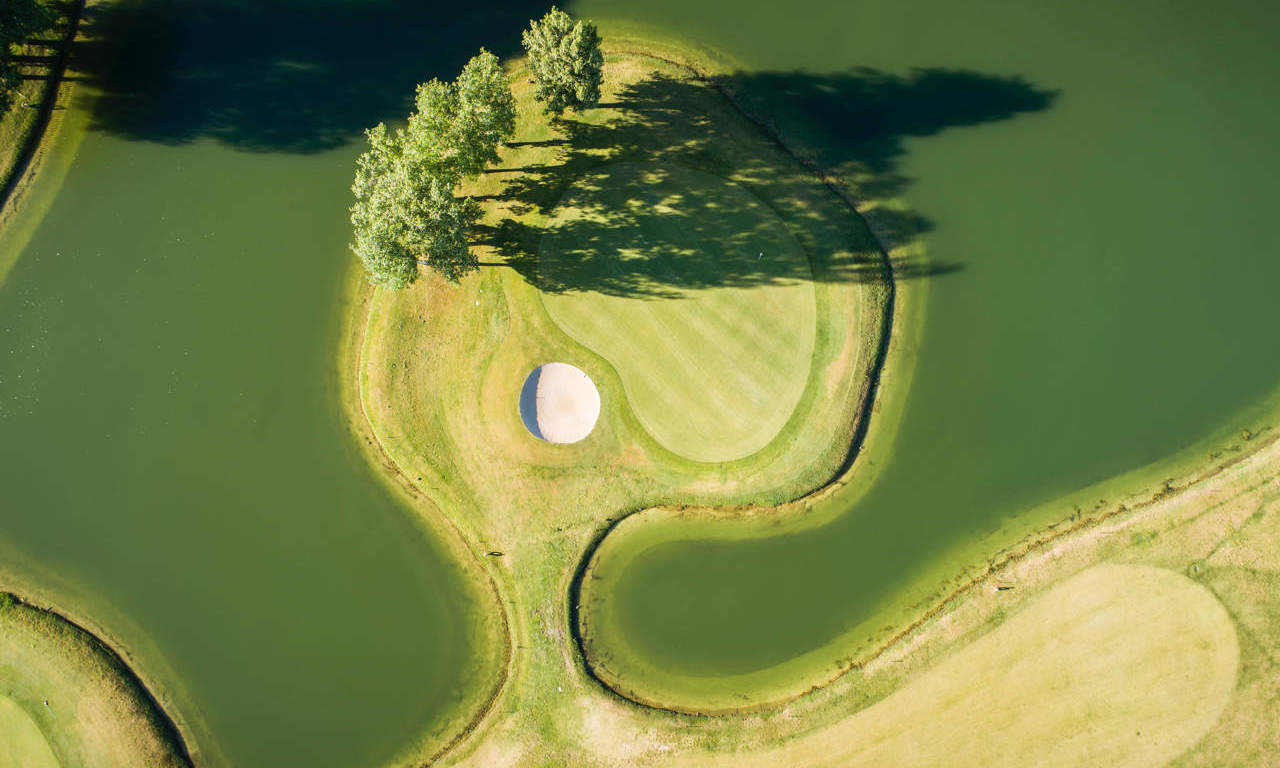
Further south on the peninsula, Troia Golf Course at Carvalhal is a serious card. It occupies a sandy spit reaching out into the sea, with tight, dune-and-pine framing and a reputation as one of the toughest examinations in the region. Reaching it involves either the drive around the estuary or the ferry from Setúbal, which turns a round there into a small expedition — factor that into your day.
Inland and the Palmela area
Around Palmela and Setúbal, Campo de Golfe do Montado at Algeruz and Palmela Village Golf Course at Quinta do Anjo offer approachable rounds in wine country, handy if you're combining golf with the Setúbal region's food and vineyards. Out on the flatlands near Samora Correia, Ribagolfe gives you two full courses (Course I and II) on one site — useful for a multi-round day without moving the car. Further inland, Dolce CampoReal Lisboa is a hillier design set away from the coast, worth the drive for golfers who like a bit of elevation and quiet. Closer to the airport, Paço do Lumiar Clube de Golfe in Lisbon itself is more of a short, convenient city option than a destination round.
Practical matters
Lisbon's international airport is central, well-connected across Europe, and close to the city — which is a real advantage. From there, the western golf zone around Cascais, Estoril and Sintra is roughly a 30–45 minute drive depending on traffic, and the whole strip is compact enough to base yourself in one place and reach several courses easily.
The catch is the geography. The three clusters are separated by the city and by the Tagus estuary:
- Cascais / Sintra (west): tight grouping, short hops between courses, best for a base if you want to minimise driving.
- South bank (Aroeira, Quinta do Peru, Palmela, Troia): reached via bridge crossings from Lisbon; plan these as their own day or two rather than day-tripping back and forth.
- Inland / north (CampoReal, Ribagolfe, Paço do Lumiar): spread out, car essential.
A hire car is effectively mandatory for a golf trip here — public transport won't connect the courses in any useful way. Traffic around Lisbon and the coast road can be slow at peak times, so build in buffer for early tee times. Many golfers base themselves in the Cascais–Estoril area for the coastal courses and the ready-made evenings, then dedicate a separate day to crossing the river for Troia or the south-bank courses.
A typical week looks like three or four rounds spread across the clusters, with rest days spent in Lisbon, Sintra's palaces, or the Cascais seafront. It's a destination that pairs golf with genuine sightseeing more naturally than most.
Who it suits — and who it doesn't
The Lisbon Coast suits golfers who want variety and don't mind driving for it. If you like the idea of pairing an exposed Atlantic dune course like Oitavos with a forested Sintra layout like Penha Longa and a quiet south-bank test like Quinta do Peru — all in one trip — this is close to ideal. It also suits couples and groups where not everyone plays every day, because the city and the coast give non-golfers plenty to do.
It's less suited to golfers who want everything on the doorstep of a single resort, with buggy-distance between clubhouse, hotel and first tee. The courses here are spread across a real, working region rather than clustered for convenience, and the estuary crossing to the south bank adds friction. Golfers who dislike wind should also go in with open eyes: the best coastal courses are exposed, and calm days are the exception, not the rule.
Go for the range and the sense of place, plan your days around the geography rather than fighting it, and the Lisbon Coast delivers a golf trip that few other European capitals can match.