
Golf in the Rhine-Ruhr: A Practical Guide to Germany's Densest Golf Region
Rhine-Ruhr
What golf here is actually like
The Rhine-Ruhr is not a golf resort. It is Germany's biggest urban region — Düsseldorf, Cologne, Duisburg, Krefeld and the old industrial Ruhr — and golf here is squeezed into the green gaps between motorways, rivers and towns. That has an upside a lot of visitors underrate: the density of courses is remarkable, drives between them are short, and you are never far from a real city with hotels, restaurants and an airport.
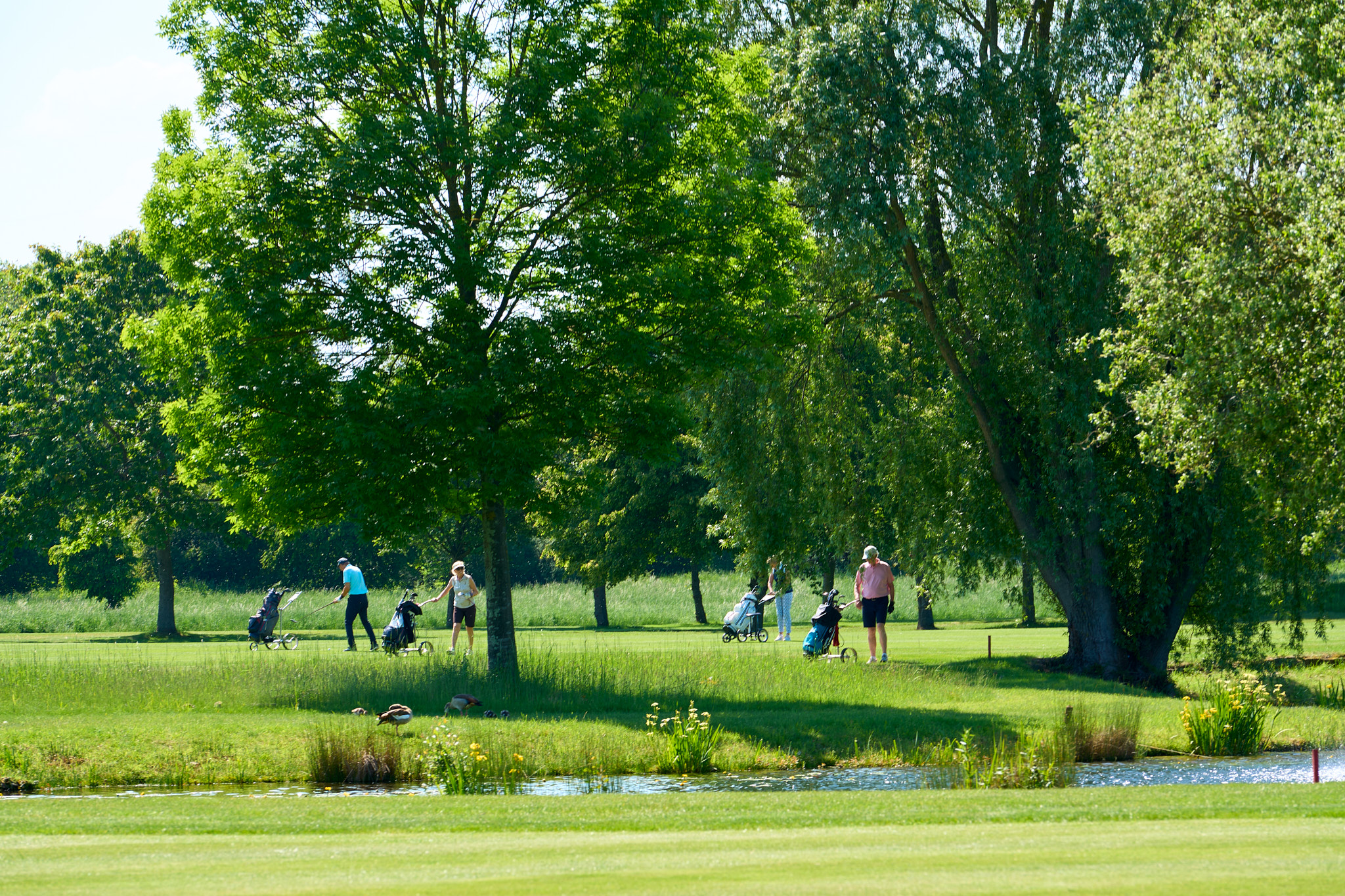
Expect mature parkland golf on gently rolling ground, plenty of mature trees, water in play more often than not, and clubs that are members' clubs first. This is not links country and it is not mountain golf. It is well-drained, well-groomed inland golf, and the best of it — Gut Lärchenhof, Hubbelrath — is genuinely championship-grade.
When to go
The playing season runs roughly April to October, with the sweet spot from May to September. This is a temperate, fairly wet part of Germany; rain is possible in any month, so pack for it and treat a dry week as a bonus rather than an expectation.
- May–June: the best combination of long daylight, greenery and settled weather. Courses are in peak condition after the spring grow-in.
- July–August: warmest and busiest, and it overlaps with the region's trade-fair and event calendar, which pushes hotel prices up and can make tee times tighter at the marquee clubs.
- September–October: an underrated window. Softer light, thinner crowds, still very playable, though you lose daylight quickly through October.
Winter golf exists but is a compromise — short days, wet ground, temporary greens on some layouts. If your trip is about the golf, come in the warmer half of the year. Because most of these are private members' clubs, booking visitor tee times ahead is essential in high season, and some of the stronger courses expect a handicap certificate.
The courses worth planning around
The headline pair
Golf Club Gut Lärchenhof in Pulheim, between Cologne and the western Rhine plain, is the most ambitious course in the region — a modern championship layout with tournament pedigree and the conditioning to match. If you are building a trip around one big-name round, this is the obvious anchor.
Golf Club Hubbelrath, in the hills east of Düsseldorf, is the classic counterpoint: a long-established, highly regarded club with more than one course and properly undulating parkland terrain. It is the kind of place that rewards a full day rather than a rushed nine. Together, Lärchenhof and Hubbelrath make a strong two-round backbone for any Rhine-Ruhr trip, and they sit on opposite sides of the conurbation, so you can pair each with courses nearby.
Around Düsseldorf and the western Rhine towns
The stretch from Düsseldorf out through Neuss, Meerbusch and Krefeld is where the courses cluster most tightly.
- Golfplatz Auf der Lausward sits right in Düsseldorf itself — about as convenient as city golf gets if you are based downtown.
- Golfclub Meerbusch and Golfanlage Hummelbachaue in Neuss are both short hops across the Rhine, easy to slot in around a city stay.
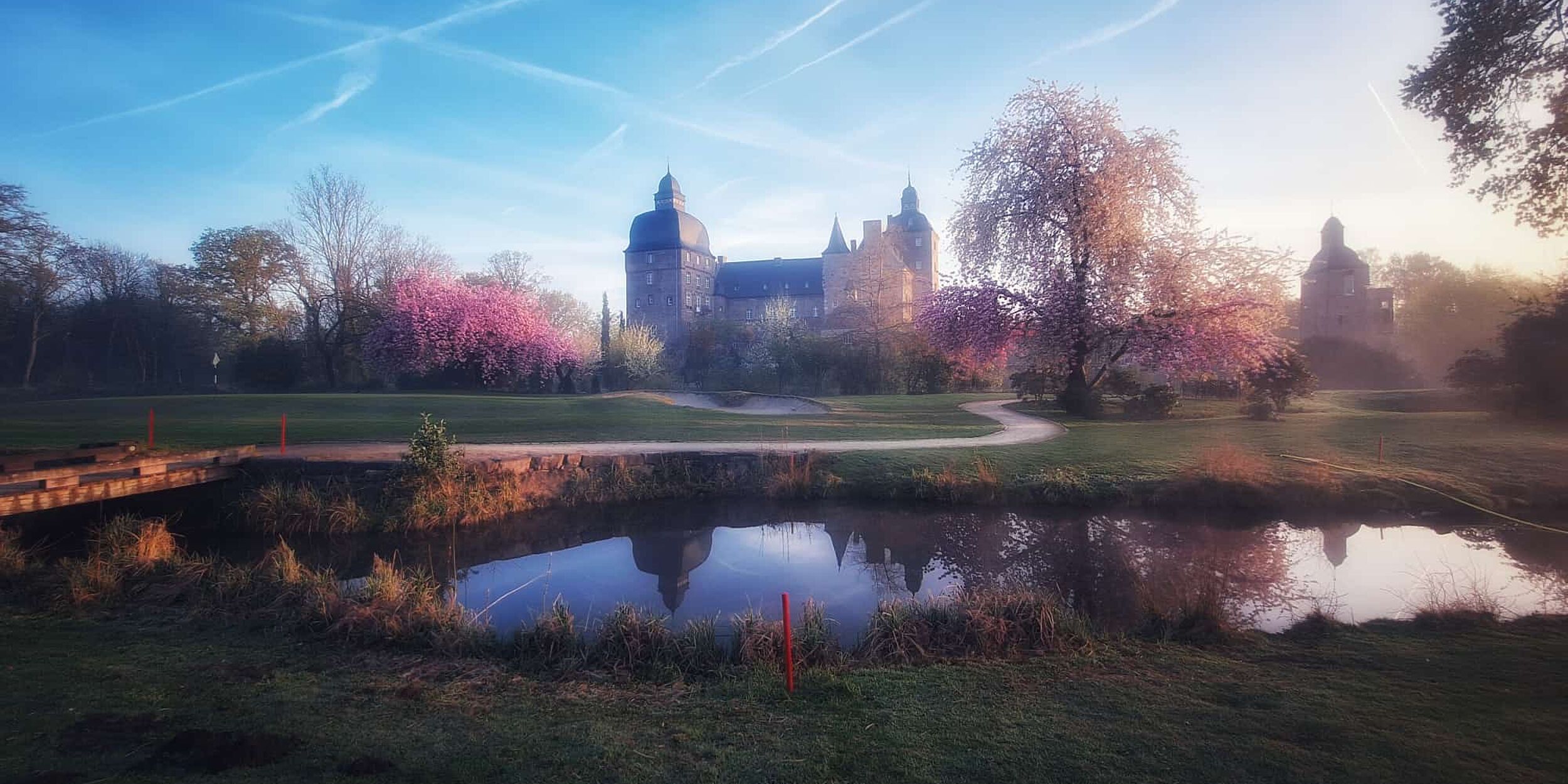
- Golf & Country Club Elfrather Mühle in Krefeld and Golfclub Schloss Myllendonk in nearby Korschenbroich give you the more traditional members'-club experience on the flatter western ground. Myllendonk, with its castle-estate setting, is a good choice if you want the round to feel like an occasion.
South of the city: Mettmann, Langenfeld and the hill country
- Golfclub Mettmann and Golf am Katzberg in Langenfeld sit in the belt between Düsseldorf and Cologne, handy if you are moving between the two cities and want to break the trip with a round.
- Golfplatz Dreibäumen in Hückeswagen is further out into the Bergisches Land hills to the east — hillier, greener, more rural. It is the pick if you want to escape the urban feel for a day and do not mind the extra drive.
West and north: the Cologne edge and the Ruhr
- Toward Cologne, Golfplatz Am Alten Fliess in Bergheim and the Golf und Country Club Velderhof extend the options on the flatter land west of the Rhine.
- North into the Ruhr proper, Golfclub Raffelberg in Mülheim an der Ruhr and Golfclub Röttgersbach in Duisburg are the industrial-region entries — green oases in a famously built-up landscape, and the natural base if your trip centres on the northern cities rather than Düsseldorf or Cologne.
That is far from the full list — the region has many more clubs than any one trip can cover — but these give you a workable spread across every corner of it.
Practical matters
Getting there is the easy part. Düsseldorf Airport is one of Germany's busiest and sits in the middle of everything; Cologne/Bonn is a short train ride south. The region has arguably the densest motorway and rail network in the country, which is exactly why the courses are so close together.
You will want a car. Public transport is excellent for city-to-city travel, but golf clubs sit on the edges of towns and you will be carrying clubs, so a rental car makes the whole thing painless. The upside of the geography is that almost nothing is far: courses across the Düsseldorf–Neuss–Krefeld triangle are typically well within half an hour of each other, and even a run from a Cologne-area course like Gut Lärchenhof up to Hubbelrath east of Düsseldorf is a comfortable day-trip drive rather than a relocation.
How a trip usually works. The smart play is to base yourself once — Düsseldorf is the most central choice, Cologne the more atmospheric alternative — and radiate out for daily rounds rather than moving hotels. A three-to-five-night stay lets you combine two or three golf days with the cities themselves. Watch the events calendar: Düsseldorf and Cologne host major trade fairs that fill hotels and spike room rates with no warning, so check dates before you book.
On the courses themselves, come prepared for members'-club etiquette. Many require a handicap certificate, dress codes are enforced, and calling or emailing ahead for visitor tee times is expected — walk-up golf is not the norm here the way it is in resort destinations.
Who it suits — and who it doesn't
This region suits the golfer who wants quality parkland golf without dead time between rounds, and who likes having a proper city on hand in the evening. It is excellent for a combined golf-and-cities trip, for a group that wants variety without long transfers, and for anyone flying in via Düsseldorf who wants to be teeing off within an hour of landing. The one or two big-name courses give a trip a genuine highlight, and the surrounding clubs fill out the itinerary with easy, short-drive rounds.
It is the wrong destination if you are chasing a self-contained resort where you stay, eat and play in one place — that model barely exists here. It is not for links purists or anyone who wants dramatic coastal or mountain scenery; this is inland golf in an industrial-urban setting, and much of the appeal is convenience rather than remoteness. And if you want to roll up and play on impulse, the private-club structure will frustrate you. Plan ahead, book your tee times, and the Rhine-Ruhr rewards you with more good golf per mile driven than almost anywhere else in Germany.